
Reviewed · MéDOC VINEYARD TOURS
Margaux & Médoc: half day private tour in a classic car
The drive through Bordeaux’s Médoc vineyards feels like stepping back in time, thanks to a Citroën 2CV convertible and a guide who puts wine into plain human terms. What I like most is the private setup with Cécilia (a Bordeaux vineyard specialist and professional wine taster) and the way the tastings teach you how wine changes from season to aging. One thing to keep in mind: at this pace, you’re tasting a lot of wine, so plan your day like a wine day, not a coffee-and-stroll day.
You’ll spend about 6 hours total, including travel between stops, passing famous Margaux-area appellations such as Margaux, Saint-Julien, Pauillac, and Saint-Estèphe. The route is designed for you to enjoy the scenery from the road while still getting real winery time on the ground.
If you’re on a tight budget, the price will feel steep at $577.64 per person. But admission is included at both château stops, and you’re paying for a private, classic-car experience with structured tastings—so it’s not just a scenic drive.
In This Review
- Key highlights worth clocking
- Why a Citroën 2CV makes the Médoc feel personal
- How the half-day timing actually works (and what to plan around)
- Château Lamothe-Bergeron: three vintages and a season-to-aging lesson
- Château Hourtin-Ducasse: grape basics, barrel blends, and berries
- The Margaux–Saint-Julien–Pauillac–Saint-Estèphe route: names you’ll finally place
- The tasting logic: how this tour teaches you to read a bottle
- Picnic after wine: a smart way to slow the day down
- Price and value: what $577.64 per person buys in the real world
- Who should book this 2CV Médoc tour (and who might skip it)
- Should you book the Margaux & Médoc 2CV tour?
- FAQ
- How long is the Margaux & Médoc half-day private tour?
- What kind of car is used?
- Is pickup offered?
- How many château stops are included?
- Are admission tickets included for the château visits?
- What wine tastings are included?
- Is there a picnic?
- Is this tour private?
- What’s the cancellation policy?
- Does the tour support service animals and general accessibility?
Key highlights worth clocking
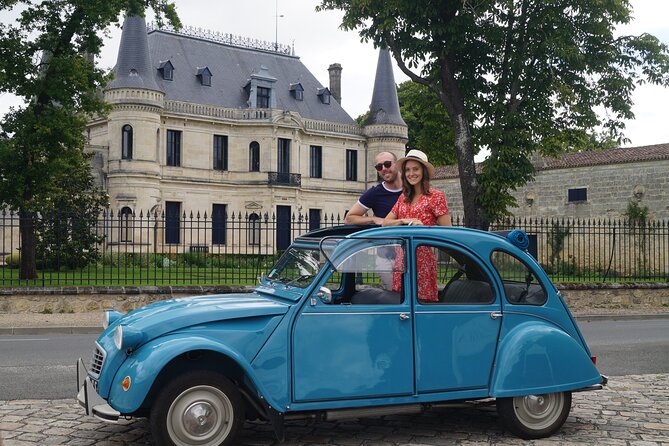
- Citroën 2CV convertible transport for a classic Médoc feel, not a bus shuffle
- Cécilia guides the day, with a vineyard and wine-tasting focus throughout
- Two château visits, each with a tasting designed to teach you something
- Season-to-aging lesson at Château Lamothe-Bergeron with 3 vintages
- Single-varietal + blend tasting at Château Hourtin-Ducasse, including a barrel-taken blend
- A suggested picnic of local products to keep the day feeling like an experience, not a checklist
North into the Medoc, more grand cru estates
- Medoc or Saint Emilion Wine Tasting and Chateau from Bordeaux★ 5.0 · 1,415 reviews
- Bordeaux: Saint-Emilion and Medoc Full-Day Wine Experience★ 4.8 · 582 reviews
- St-Emilion & Médoc Wine Day Tour: Chateaus, Tastings and Lunch★ 5.0 · 430 reviews
- Medoc Region Wine Day Trip with Vineyard Visits & Tastings from Bordeaux★ 4.5 · 293 reviews
Why a Citroën 2CV makes the Médoc feel personal
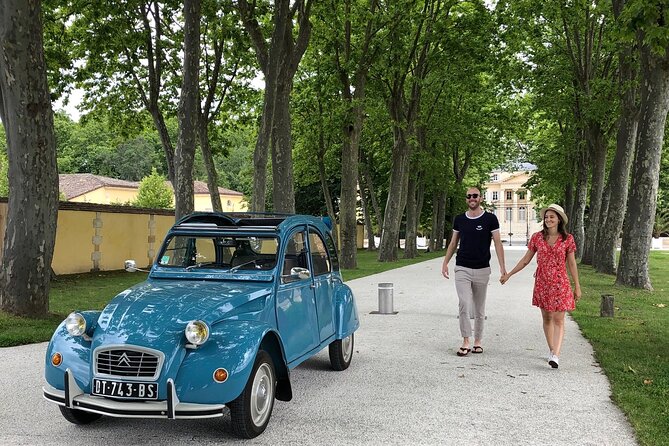
The 2CV convertible is more than a fun gimmick. It changes how you experience the route: the wind in your face, the low-slung view, and that slightly theatrical feeling of rolling past vineyard roads like you’re in an old movie. It also slows the day down emotionally. You’re not just traveling—you’re arriving in a more relaxed mood.
Pickup is offered, which matters because the Médoc isn’t a “walk between wineries” kind of place. With the car arranged for you, the day stays smooth and you can focus on wine and the places behind the labels.
And because this is a private tour, you can set the tone with your guide. If you want to ask lots of questions, Cécilia can follow that thread. If you’d rather listen and take notes, the pacing can stay calm. That’s a big quality-of-life upgrade versus fixed-group formats.
How the half-day timing actually works (and what to plan around)
This is listed as a half day, but plan for about 6 hours of door-to-door time. The key detail is that the duration of each route point includes transportation. So your time doesn’t feel chopped into random fragments—you’re getting a continuous flow: drive, arrive, taste, learn, then taste again.
You’ll typically have two main château stops plus travel between them, and then you’re set up to continue with food after the wineries. The day is structured, but it doesn’t read like a rushed sprint.
Practical advice: treat this like an alcohol-focused outing. Even with guide-led tastings, you’ll likely end up with a strong wine flavor memory for the rest of the day. Bring a good attitude toward slow sipping, and consider arranging your own later plans accordingly.
Château Lamothe-Bergeron: three vintages and a season-to-aging lesson
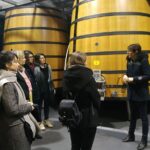
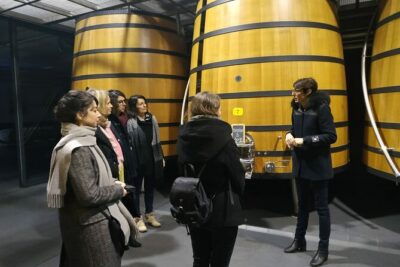
Your first stop is Château Lamothe-Bergeron, with about 1 hour on site. This visit is framed as something fun and accessible, starting with the château’s history in a way that doesn’t feel like you’re trapped in a museum script.
Then comes the part that really does the teaching: a tasting of 3 different vintages from the château. That sounds basic until you realize what it’s training your brain to notice. You’re tasting the same estate across different years, so you start to feel how the season leaves a fingerprint on the wine.
From there, the tasting also helps you connect the dots to aging. You’re not just drinking for taste—you’re learning how the wine evolves over time. It’s a smart way to understand why two bottles with the same château name can still feel like different characters.
One possible consideration here: the tasting is short, by design. That’s great for sampling and learning quickly, but if you love long, deep technical comparisons, you’ll want to follow up later with your own bottle notes.
Still in Margaux? A few more classified estates


Château Hourtin-Ducasse: grape basics, barrel blends, and berries
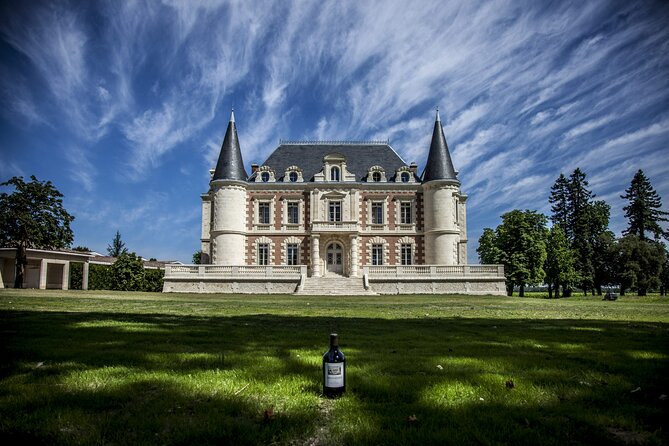
Next up is Château Hourtin-Ducasse for about 1 hour 30 minutes. This stop has a more “how it’s made” feel. You’ll cover grape varieties, blending, and aging techniques—so you understand the logic behind the flavors instead of just memorizing what to like.
Then the tasting gets more hands-on and varied:
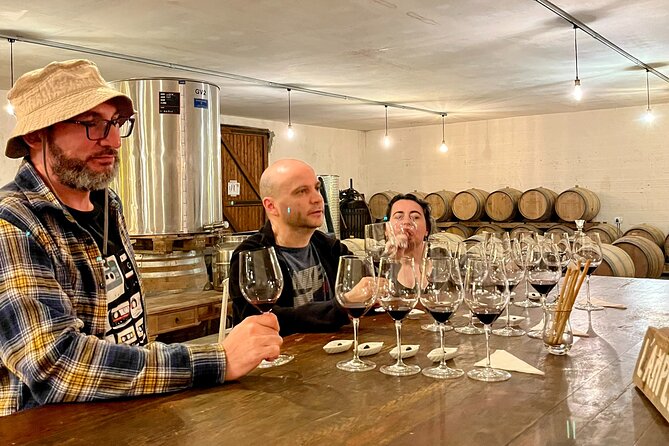
- You start with 4 single-varietal wines (each one tied to a grape story)
- Then you taste a blended wine taken from the barrels
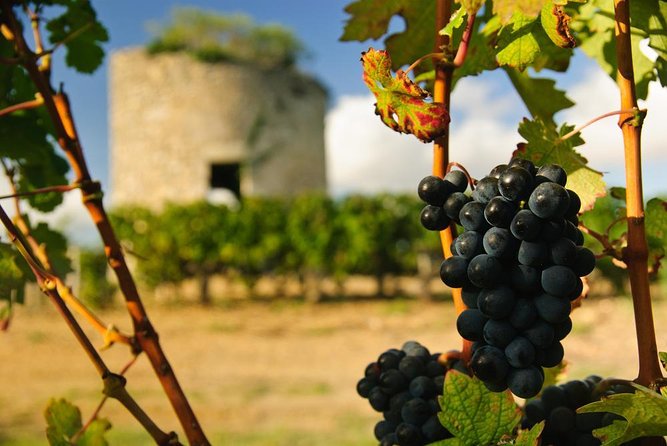
- And it’s served alongside their berries
- After that, you move to 5 other wines that are already bottled, served with a local plate while you sit together
That structure is clever because it trains your palate in steps. Single varietals help you identify building blocks. Then the barrel blend gives you the “why it works together” moment. And the later bottled wines let you compare what’s in the glass with what the producers already consider ready.
If you’re a Bordeaux wine person, this stop will feel especially satisfying. If you’re newer, it’s still approachable because the tasting sequence builds understanding instead of throwing a wall of labels at you.
The Margaux–Saint-Julien–Pauillac–Saint-Estèphe route: names you’ll finally place
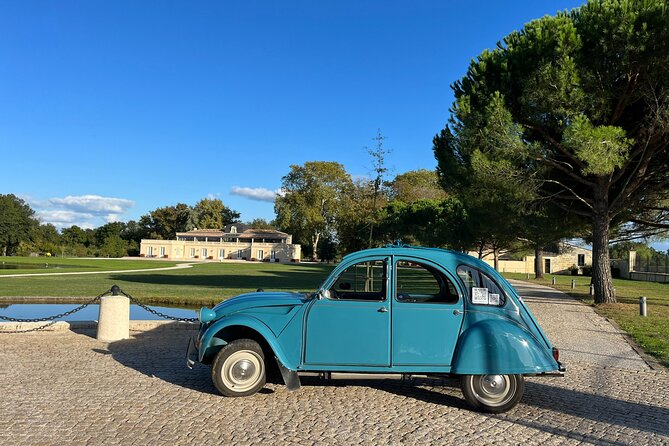
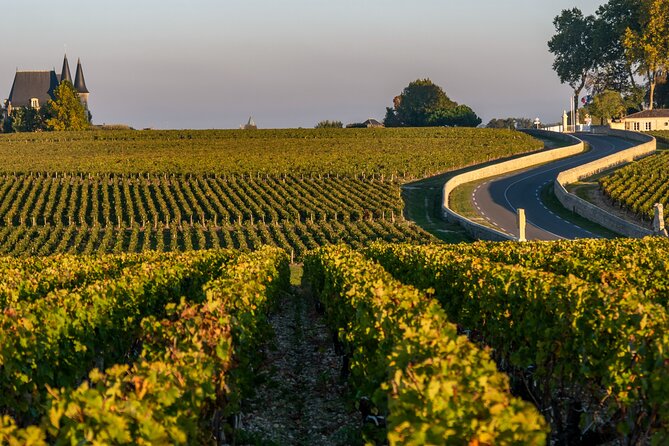
As you drive, you’ll pass through and around the villages tied to some of the region’s best-known appellations: Margaux, Saint Julien, Pauillac, and Saint Estèphe. The day’s focus isn’t only on what’s in your glass—it’s also on where these wines come from.
This matters because Bordeaux can feel like a wall of names until you experience the geography behind them. Seeing the château-route scenery and the village rhythm helps those labels stop being abstract. You get a sense of why these appellations are grouped the way they are and how the drive itself tells a story.
One reason I like this kind of routing: it breaks up the day. Instead of bouncing from door to door, you get stretches where you can just look out and absorb. Then you arrive back at the next château with a clearer mental map.
The tasting logic: how this tour teaches you to read a bottle
This tour is built around a learning arc, even though it stays fun. Here’s how it plays out in your day:
At Lamothe-Bergeron, you practice thinking about vintage impact and the role of aging. That gives you the “time” lens.
At Hourtin-Ducasse, you practice thinking about varietals, blending, and technique. That gives you the “composition” lens.
Put together, you start walking away with two big skills:
1) understanding why wines from the same estate can differ by year
2) understanding why blends are made the way they are
And because this is private, you can ask Cécilia to explain what you’re noticing in your glass while it’s still fresh. That’s one reason the tastings feel less like a performance and more like a real conversation.
Picnic after wine: a smart way to slow the day down
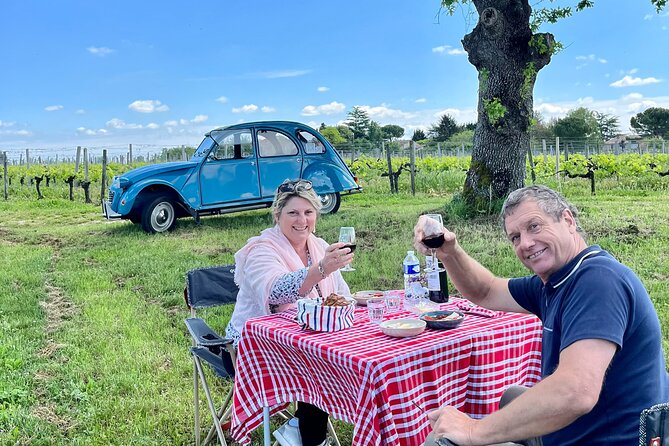
After the château visits, the tour suggests continuing with a picnic made up of local products that are selected for you. Even though it’s listed as a suggestion, the intent is clear: you’re not finished when the last tasting ends.
A food stop like this can do two useful things. First, it gives you a break from wine-only focus. Second, it turns the day into a more “live it” experience—something you’ll remember for the whole atmosphere, not just the tasting notes.
Practical tip: if you’re sensitive to wine flavors or acidity, having food on board helps you appreciate what you’re drinking without your palate getting overwhelmed.
Price and value: what $577.64 per person buys in the real world
Let’s talk money, because this is the biggest decision point.
At $577.64 per person, you’re paying for a package that includes:
- a private half-day experience
- classic-car transport in a 2CV convertible
- pickup offered
- admission tickets included at both château stops
- structured wine tastings with Cécilia guiding the learning
If you were to piece together transport + guide + multiple winery visits, the cost often rises quickly. Here, you’re buying one “turnkey” experience with built-in value: you don’t spend time figuring out logistics, and you get direct winery access rather than just roadside sightseeing.
The private part is key. For many people, this is where the value lives—fewer compromises, more focus, and the ability to ask questions that actually match your interests.
The downside is obvious: it’s pricey for solo travelers and couples who are budget-conscious. If you’re traveling with friends and want a private day anyway, the per-person cost can start to feel more reasonable.
Who should book this 2CV Médoc tour (and who might skip it)
This tour makes sense for you if:
- you want a private wine day rather than a crowded group format
- you like Bordeaux wine enough to enjoy guided tastings at two château stops
- you’re the kind of person who enjoys learning through comparison (vintages, varietals, blends)
- you love classic cars and want that to be part of the travel story
You might think twice if:
- you’re trying to keep spending low
- you don’t like alcohol-based experiences, since the tastings are built into both stops
- you want only one short winery visit rather than two structured château sessions
Also, it’s a good fit for couples. The car and pacing give it a romantic, relaxed feel, but it’s still informative enough that you won’t feel like you’re just doing sightseeing.
Should you book the Margaux & Médoc 2CV tour?
I’d book it if you want a Médoc day that feels special from the first minute—classic car transport, a real guide in Cécilia, and tastings designed to teach you how wine changes by season and by winemaking choices. The admissions are included, and the day has a built-in rhythm: drive, learn, taste, and then (optionally) picnic your way into a slower finish.
Skip it if you only want a light overview of Bordeaux with minimal tasting, or if the idea of paying private-tour pricing doesn’t fit your travel style. In that case, you may get the same region vibes for less.
If you’re on the fence, I’d choose based on one question: do you want wine education plus a classic-car vibe, or do you just want a scenic day? This tour leans hard toward the first option.
FAQ
How long is the Margaux & Médoc half-day private tour?
It’s about 6 hours total, and the listed time for each stop includes transportation.
What kind of car is used?
You’ll ride in a Citroën 2cv convertible.
Is pickup offered?
Yes, pickup is offered.
How many château stops are included?
There are two château stops: Château Lamothe-Bergeron and Château Hourtin-Ducasse.
Are admission tickets included for the château visits?
Yes, admission tickets are included at both stops.
What wine tastings are included?
At Château Lamothe-Bergeron, you’ll taste 3 different vintages. At Château Hourtin-Ducasse, you’ll taste 4 single-varietal wines, a blended wine taken from the barrels (tasted with the berries), and 5 additional bottled wines served around a local plate.
Is there a picnic?
A picnic made with local products is suggested for you after the wine tasting.
Is this tour private?
Yes. It’s a private tour/activity, and only your group participates.
What’s the cancellation policy?
Free cancellation is available up to 24 hours in advance for a full refund.
Does the tour support service animals and general accessibility?
Service animals are allowed. It also notes that most travelers can participate and that it’s near public transportation.
Bordeaux by Sidecar and 2CV





Margaux and Its Classified Estates
North to the Medoc





Just Added: Fresh Bordeaux Reviews



Médoc Vineyard Tours, compared.
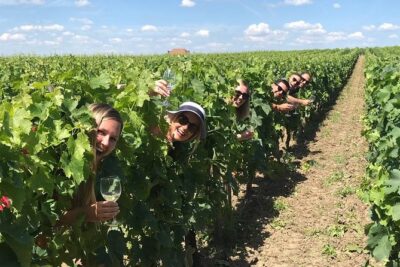 ★ 5.0Medoc or Saint Emilion Wine Tasting and Chateau from BordeauxFrom $1141,415 reviews
 ★ 4.8Saint-Emilion and Medoc Full-Day Wine ExperienceFrom $212582 reviews
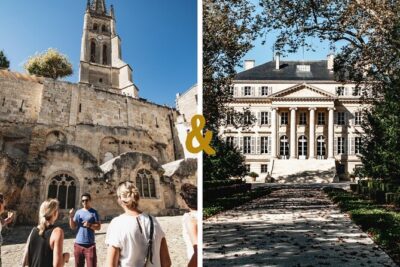 ★ 5.0St-Emilion & Médoc Wine Day Tour: Chateaus, Tastings and LunchFrom $235430 reviews
 ★ 4.5Medoc Region Wine Day Trip with Vineyard Visits & Tastings from BordeauxFrom $266293 reviews
 ★ 4.6From Bordeaux: Medoc Half-Day Wine TourFrom $153280 reviews
 ★ 4.5Médoc Region Half-Day Wine Tour with Winery Visit & Tastings from BordeauxFrom $156211 reviews
 ★ 4.8From Bordeaux: Full-Day Medoc Wine TourFrom $259119 reviews
 ★ 4.9Médoc & St-Emilion Wine 3 châteaux with lunchFrom $234116 reviews
Browse the lists this tour appears in