Reviewed · BORDEAUX VINEYARD & CHâTEAU TOURS
Discovery of the Bordeaux vineyard in 3 wines
Three Bordeaux pours, plus Roman-era stories.
This Bordeaux wine tasting at Le Pied à Terre is a friendly, small-group lesson built around tasting 3 emblematic wines, so you come away with both flavor and context. I especially like the way the host explains the difference between left bank power and right bank elegance, and I also appreciate the clear, step-by-step tasting tips you can use after you leave. The one possible drawback: if you already know a lot about Bordeaux, the storytelling can feel a bit stretched.
You’ll meet at 22 Rue Judaïque in central Bordeaux, then settle into an easy-to-find wine-shop setting for about 1 hour 30 minutes. Besides the tasting, you get a starter of charcuterie and cheese from the Basque Country (Maison Pierre OTEIZA), which makes the whole thing feel less like a lecture and more like a proper food-and-wine afternoon.
In This Review
- Quick highlights before you book
- Le Pied à Terre and the Bordeaux “starter base” you’ll like
- The heart of the class: tasting 3 Bordeaux wines as a map
- Left bank vs right bank: why that comparison helps your next bottle
- Tasting techniques that don’t require cork-sniffing theater
- Food pairing in Bordeaux style: Basque charcuterie and cheese
- Price and value: what $42.33 buys you in real terms
- Timing, group size, and what to watch for on the day
- Who should book this Bordeaux wine tasting, and who might want something else
- Should you book Discovery of the Bordeaux Vineyard in 3 Wines?
- FAQ
- FAQ
- How long is the Bordeaux wine tasting?
- How many wines will I taste?
- Where is the meeting point?
- Is the tour offered in English?
- Is this a mobile ticket experience?
- How big is the group?
- What food is included?
- Can dietary needs like vegan or vegetarian be accommodated?
- Are service animals allowed?
- What’s the cancellation policy?
Quick highlights before you book
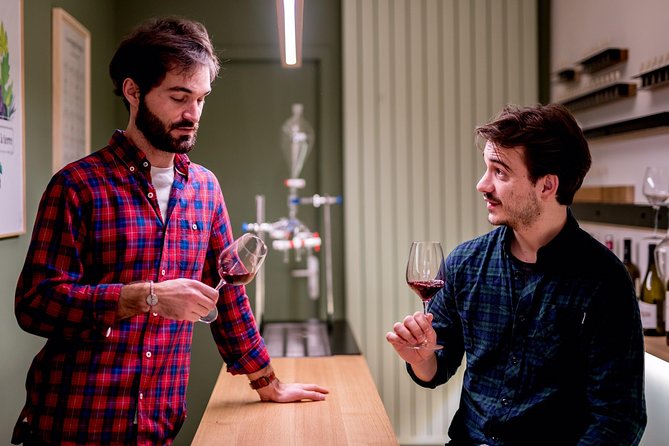
- 3 wines, taught as a lesson: left bank, right bank, plus a dry white, each framed with terroir and winemaking context.
- Roman-times stories: history is worked into the wine world, including stories tied to Roman-era Bordeaux.
- Tasting technique you can reuse: the host walks you through how to taste, not just what to taste.
- Small group size (max 12): enough attention for questions without turning it into a private class.
- Basque pairings included: charcuterie and cheese from Maison Pierre OTEIZA show up alongside your pours.
- English offered: the session is designed for English speakers and includes room for discussion.
More Bordeaux cellar doors left open
- Medoc or Saint Emilion Wine Tasting and Chateau from Bordeaux★ 5.0 · 1,415 reviews
- Saint Emilion Half-Day Trip with Wine Tasting & Winery Visit from Bordeaux★ 4.5 · 1,034 reviews
- Saint-Emilion Afternoon Wine Tour – 2 Wineries & delicacies★ 5.0 · 614 reviews
- Bordeaux: Vineyards Wine Tasting Half-Day Trip★ 4.2 · 470 reviews
Le Pied à Terre and the Bordeaux “starter base” you’ll like
This experience is set up for people who want to understand Bordeaux without jumping straight into a full-day winery tour. You’re not sent across the region; instead, you start right in Bordeaux at a location that’s simple to find and close enough to public transportation to keep your day smooth.
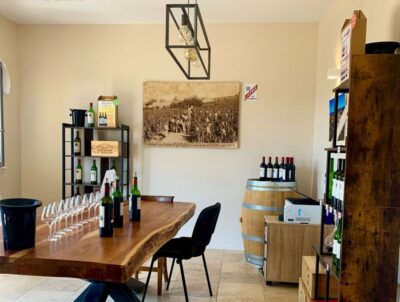
You’ll spend your time in the Le Pied à Terre tasting space (a wine-shop style setup with an upstairs tasting room). That matters, because it keeps the pace calm. There’s no rushing between distant stops, no hunting for a specific estate gate, and no “wait while we figure it out” feeling. The vibe is focused: taste, talk, taste again.
Also, the group size is capped at 12. That’s a big deal in wine education. With small groups, you’re more likely to get your questions answered—whether you’re wondering why one red tastes more structured than another, or how to talk about flavors without sounding like you’re performing.
One more practical point: you get a mobile ticket, so you can keep things light on your phone and not worry about printing.
The heart of the class: tasting 3 Bordeaux wines as a map
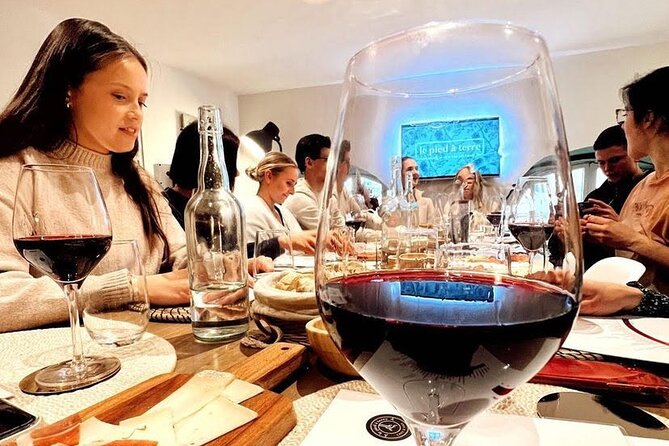
The tour’s structure is smart: it treats the three wines like a guide to Bordeaux itself. You don’t just get three pours; you get a framework for understanding why the region tastes the way it does.
The tasting set is built around three different angles of Bordeaux:
- A strong left-bank style red, often tied to the classic reputation of the Left Bank.
- A more elegant right-bank style wine, framed as a contrast to the left-bank approach.
- A dry white from top estate territory, presented as a refreshing third perspective rather than an afterthought.
Each wine is explained in context: appellation, grape varieties, winemaking methods, and the history of the estate behind the bottle. For me, this is where the value comes from. Bordeaux can feel complicated on paper—names, classifications, grapes, rules. In a tasting like this, those terms become practical. You hear the “why,” then your glass gives you the “how it tastes.”
A key feature here is the host’s approach to terroir. You’ll hear about how the growing area influences what’s in the glass, and you’ll connect that to what you actually notice: weight, texture, aromatic style, and the way flavors evolve as the wine opens.
Left bank vs right bank: why that comparison helps your next bottle
If you’ve ever stood in front of a Bordeaux shelf and felt your eyes glaze over, this part is for you. The tasting does something many wine tastings skip: it turns geography into flavor.
You’ll hear the differences between the Left Bank and Right Bank explained in plain language. The goal is not to memorize definitions. The goal is to start recognizing patterns—like why one style can feel more firm and structured, while another can come across as more refined in the way it presents fruit and texture.
Even if you’re a beginner, this framework gives you something to hold onto. You’re not just tasting; you’re building a mental map. Later, when you’re choosing a bottle, you’ll remember the comparison and use it like a shortcut.
And yes, history is part of that storyline. The host shares Roman times background while walking you through Bordeaux wine culture. It’s not history for history’s sake. It’s meant to give you a sense of continuity—how the region’s identity shaped the way wine developed over time.
More Bordeaux labels worth opening

Tasting techniques that don’t require cork-sniffing theater
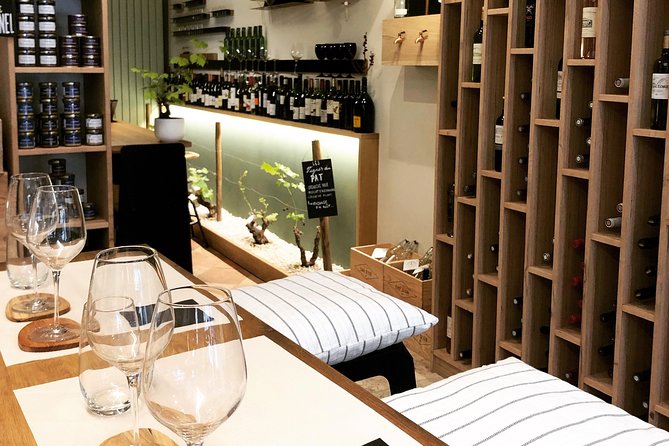
The best part of this class is how it teaches tasting as a real skill. You get tips for how to taste wine with a method you can repeat at home—rather than a set of random adjectives.
You’ll be guided through the basic steps of tasting: how to observe the wine, how to notice aromas, and how to interpret what you taste. The host also talks through food and wine pairing logic, so you start understanding not just what tastes good, but why it works.
This is also the kind of session where questions are welcome. The tone stays relaxed and interactive, which is important if your wine knowledge is limited. Instead of feeling tested, you get coached.
Based on the names mentioned in the session, the class is led by people like James or Pierre (both showing up in different contexts). Whoever is at the front, the teaching style comes across as structured, with humor and a clear focus on making wine understandable.
If you’re the type who learns best by doing, you’ll like that you taste around three times through the lesson. Each tasting moment supports the explanation rather than replacing it.
Food pairing in Bordeaux style: Basque charcuterie and cheese
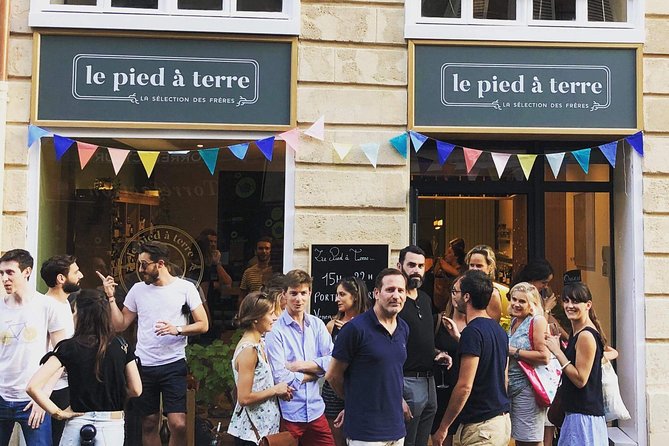
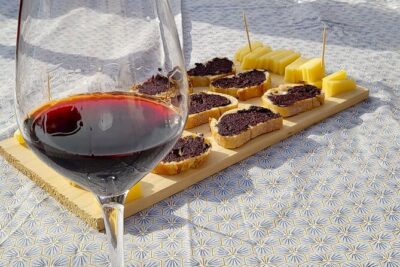
Wine tastes better with food, and this one doesn’t treat food like an optional add-on. Your starter is charcuterie and cheese from the Basque Country from Maison Pierre OTEIZA.
That pairing choice makes sense. Salty cured meats and cheese help you notice structure and balance in the wines. It also keeps the tasting grounded in something everyday travelers often miss: how wine really gets enjoyed.
You’ll also talk about pairings during the session. This matters because Bordeaux can be intimidating when you’re just thinking about wine alone. But once you link wine to food, it becomes practical. You learn which flavors tend to “shake hands” with certain wine styles, instead of guessing.
Diet note: one review mentions the hosts can be flexible for vegans and vegetarians if you let them know ahead of time. If your diet is specific, I’d message the operator when you book, so the pairing part actually works for you.
Price and value: what $42.33 buys you in real terms
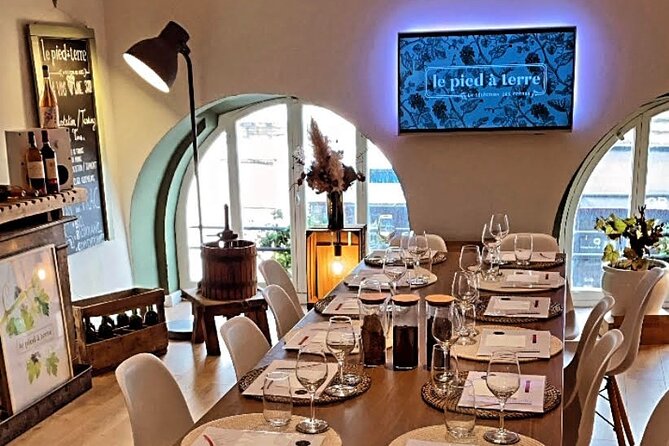
At $42.33 per person for about 90 minutes, this experience is priced like a short wine education class with food included—not like a winery tour with transportation costs.
Here’s why the value holds up:
- You’re getting three guided wine tastings, not one random pour.
- The wines are taught in a Bordeaux framework (appellation, grapes, winemaking, and estate context).
- You also get a Basque charcuterie-and-cheese starter, which changes the experience from “sip and leave” to “sip and learn together.”
For Bordeaux specifically, this is a smart use of time. A vineyard visit can be a half-day or full-day commitment, and it’s easy to spend hours in transit without fully understanding what you just tasted. This tasting gives you a foundation first. Then, if you later visit a winery, your listening skills improve immediately.
Timing, group size, and what to watch for on the day
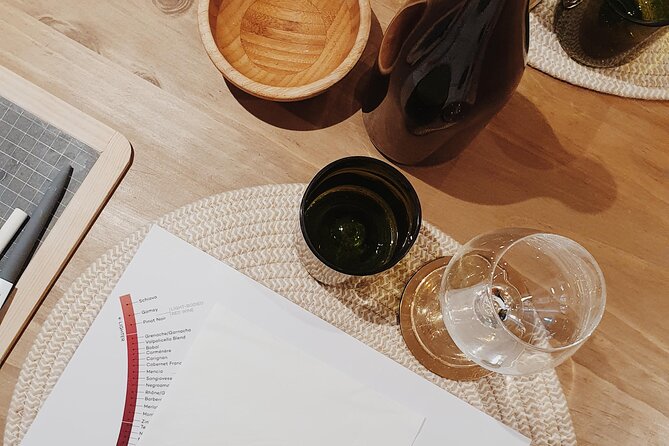
This class runs for about 1 hour 30 minutes, and it’s offered in English. The group is limited to a maximum of 12 travelers, which supports a more conversational feel and helps you get answers.
You also receive confirmation at booking. That matters because start times can vary by day and setup. One practical thing to note: there’s at least one mention that a time displayed elsewhere may not match the actual session time (for example, a 2:30pm start showing up instead of an earlier listed time). The safe play is simple: check the time shown in your confirmation.
When you arrive, your meeting point is 22 Rue Judaïque, 33000 Bordeaux. Plan a little buffer so you’re not walking in while the tasting is already underway. Wine education flows best when you’re relaxed.
Who should book this Bordeaux wine tasting, and who might want something else
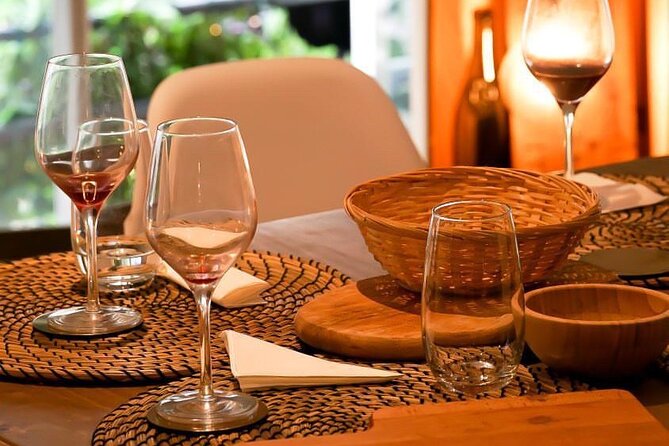
This experience is a great fit if you fall into one of these buckets:
- You want a beginner-friendly introduction to Bordeaux.
- You’d like to learn how to taste wine in a way you can use anywhere.
- You’re curious about Left Bank vs Right Bank, but you don’t want to turn it into homework.
- You want a wine class that includes real food pairing instead of just sipping.
It may be less ideal if you already have a deep Bordeaux classification background and you want a very tight, technical presentation. One caution from the way the session is described: for intermediate drinkers, the talk can feel a bit rambling instead of purely structured.
If you’re traveling solo, this is also a good choice. Small groups make it easier to talk during the pauses, and you’re not stuck watching from the corner while everyone else already knows the drill.
Should you book Discovery of the Bordeaux Vineyard in 3 Wines?
Yes—book it if you want the quickest path to understanding what makes Bordeaux bottles taste different. The mix of three tastings, clear teaching, Roman-era storytelling, and a Basque charcuterie-and-cheese starter turns a short afternoon into a real learning experience.
Don’t book it if you’re chasing a vineyard-views, on-the-ground estate experience. This is a tasting-room lesson, not a countryside driving day.
If your goal is to leave Bordeaux with better instincts—how to choose a bottle, how to describe what you taste, and how to connect style to place—this class is one of the most time-efficient ways to get there.
FAQ
FAQ
How long is the Bordeaux wine tasting?
It lasts about 1 hour 30 minutes.
How many wines will I taste?
The session is a guided tasting of 3 wines.
Where is the meeting point?
The meeting point is 22 Rue Judaïque, 33000 Bordeaux, France.
Is the tour offered in English?
Yes, it’s offered in English.
Is this a mobile ticket experience?
Yes, you’ll have a mobile ticket.
How big is the group?
There’s a maximum group size of 12 people.
What food is included?
A starter of charcuterie and cheese from the Basque Country is included, from Maison Pierre OTEIZA.
Can dietary needs like vegan or vegetarian be accommodated?
The hosts are described as flexible for vegans and vegetarians if you let them know ahead of time.
Are service animals allowed?
Yes, service animals are allowed.
What’s the cancellation policy?
You can cancel for free up to 24 hours in advance for a full refund. If you cancel less than 24 hours before the experience starts, the amount paid is not refunded.
More Bordeaux Wine to Taste
More Tour Reviews in Bordeaux
More Bordeaux Cellar Doors
Just Added: Fresh Bordeaux Reviews

Bordeaux Vineyard & Château Tours, compared.
 ★ 5.0Medoc or Saint Emilion Wine Tasting and Chateau from BordeauxFrom $1141,415 reviews
 ★ 4.5Saint Emilion Half-Day Trip with Wine Tasting & Winery Visit from BordeauxFrom $1331,034 reviews
 ★ 5.0Saint-Emilion Afternoon Wine Tour – 2 Wineries & delicaciesFrom $119614 reviews
 ★ 4.8Saint-Émilion: Bordeaux Vineyard Tour and Wine TastingFrom $21578 reviews
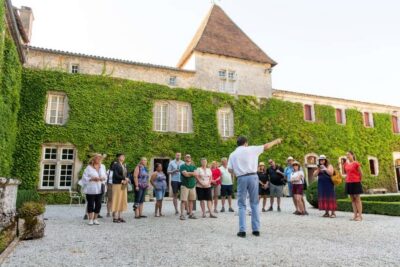 ★ 4.2Vineyards Wine Tasting Half-Day TripFrom $68470 reviews
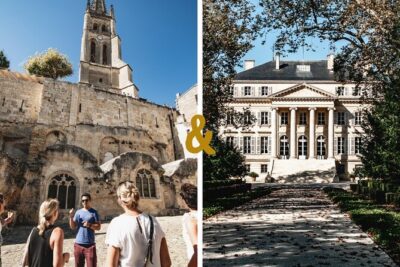 ★ 5.0St-Emilion & Médoc Wine Day Tour: Chateaus, Tastings and LunchFrom $235430 reviews
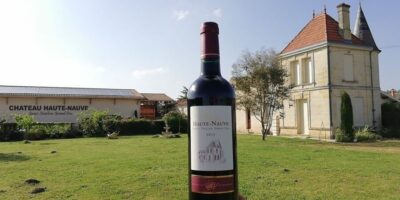 ★ 5.0Saint-Émilion: Vineyard Walking Tour and TastingFrom $29404 reviews
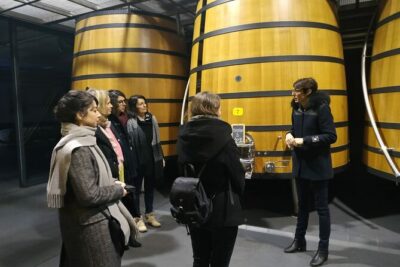 ★ 4.5Medoc Region Wine Day Trip with Vineyard Visits & Tastings from BordeauxFrom $266293 reviews
Browse the lists this tour appears in