
Reviewed · GARONNE RIVER CRUISES
Guided cruise Bordeaux UNESCO
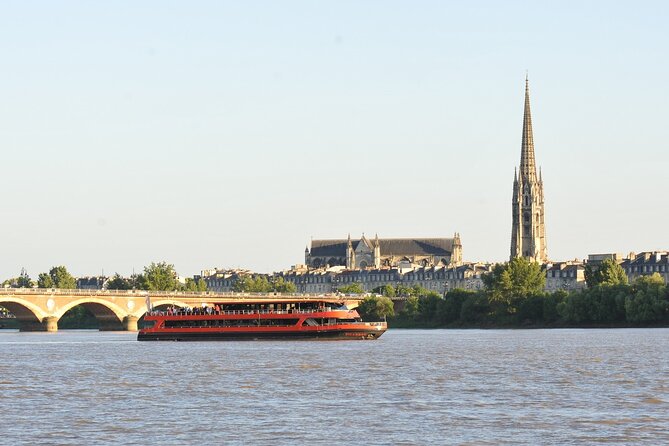
Bordeaux looks different from the river. This guided UNESCO-style cruise along the Garonne gives you a quick hit of historic facades and major bridges, right from the water. You start at the Pontoon of honor on Quai Richelieu, then glide past landmarks like Pont Chaban-Delmas and the Cité du Vin area.
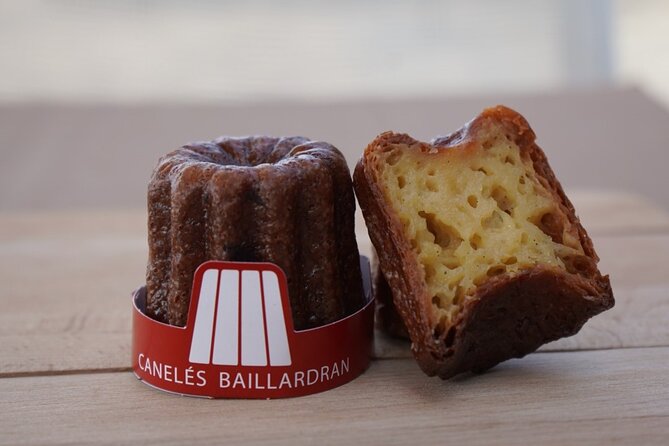
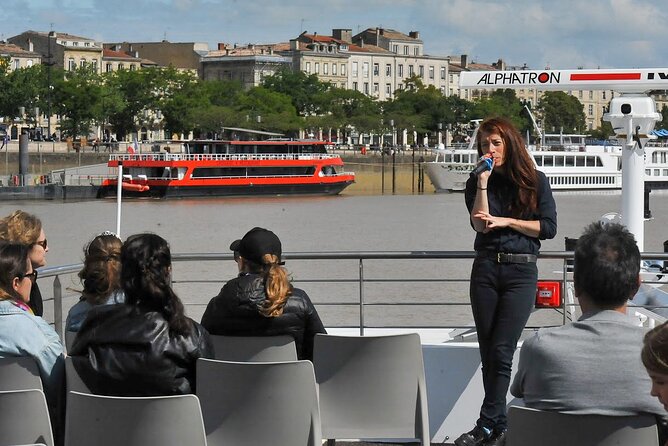
I especially like the story-led guide time, with commentary that’s lively and, in the best moments, genuinely funny. Guides such as Rory and Iona have stood out for keeping the group engaged while pointing out what you’re actually looking at. I also love the Baillardran canelés break, because it turns the cruise from scenery-only into a Bordeaux flavors moment.
One thing to plan for: the experience depends on the sound and language balance. If the audio is hard to catch or you end up with mostly French on the mic, you’ll miss some of the context that makes the cruise click.
In This Review
- Key takeaways before you board
- Why a 1-hour Bordeaux UNESCO-style cruise works so well
- Finding the Pontoon of honor and settling in on board
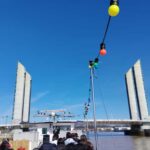
- Bridges of the Garonne: Pont Chaban-Delmas, Pont d’Aquitaine, and Pont de Pierre
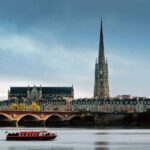
- Place de la Bourse and Cailhau Gate from the water
- Place des Quinconces and Jacques Chaban Delmas Bridge: angles you can’t fake
- Wine city focus: Cité du Vin, canelés, and the architecture story
- Guide energy, English clarity, and how to get the best experience
- Price and value: $16.87 for a guided river sampler
- Should you book this Bordeaux UNESCO river cruise?
- FAQ
- How long is the Bordeaux UNESCO guided cruise?
- How much does it cost per person?
- Where does the cruise start?
- Is the tour offered in English?
- Do I need a printed ticket?
- What’s included in the price?
- Are snacks included?
- How many people can be on the tour at once?
- Is the cruise dependent on weather?
- Can I cancel for a full refund?
Key takeaways before you board
- A true quick tour: about 1 hour on the water, paced for seeing a lot without getting stuck
- Big bridge lineup: Pont Chaban-Delmas, Pont d’Aquitaine, Pont de Pierre, plus Jacques Chaban Delmas Bridge
- UNESCO facades from the Garonne: the historic-city look you can’t easily copy from the streets
- Cité du Vin spotlight: the guide explains the area and its unusual architecture
- Included refreshment: bottled water plus a bar that’s open during the break
- Canelés are part of the plan: Baillardran canelés come with a bit of history
Back onto the Garonne, more time on the water
- Bordeaux: River Garonne Cruise with Glass of Wine and Canelé★ 4.5 · 3,630 reviews
- Bordeaux: Guided River Cruise★ 4.3 · 1,014 reviews
- Bordeaux: River Cruise with Commentary, Wine and Canelé★ 4.4 · 594 reviews
- Prestige Commented Cruise glass of wine and Canelé in Bordeaux★ 4.0 · 517 reviews
Why a 1-hour Bordeaux UNESCO-style cruise works so well
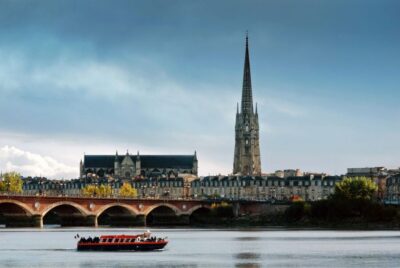
This is the kind of tour that gives you orientation fast. Bordeaux is spread out, and walking to every “must-see” can chew up a full day. From the river, the city lines up like a photo album: facades, stonework, and bridges that immediately explain the relationship between the port, the historic center, and the modern wine world.
The timing is also smart. At around an hour, you get the overview without draining your energy. If you’re only in Bordeaux for a short stay, this is a practical way to get your bearings, then decide what needs a second visit on foot.
You should also know the cruise is built for views rather than a long stop-and-stare experience. The power here is in what you see while moving: the way bridges frame the skyline, and how landmarks like Place de la Bourse and Cailhau Gate show up from an angle most tourists never get.
Finally, the tour runs best when weather is cooperating. It needs good weather, and if they cancel because of poor conditions, you’re offered another date or a full refund.
Finding the Pontoon of honor and settling in on board
You meet at the Pontoon of honor, Quai Richelieu. It’s a straightforward start, and it makes sense because the Garonne views open up right where the boat lines up. You’ll use a mobile ticket, so have it ready on your phone.
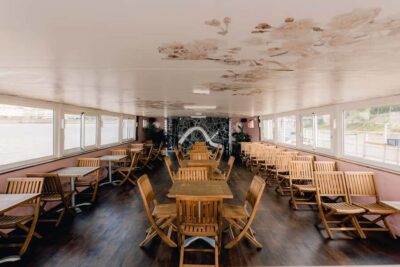
On board, the comfort and basics are covered. You get air-conditioned comfort (useful in summer), a restroom on board, and free bottled water plus fresh filtered water. There’s also a bar open during the break, which is a nice touch if you want to add a glass while you’re taking in the scenery.
Group size matters here. There’s a maximum of 150 travelers, so this isn’t a tiny private boat. Still, it’s paced like a guided sightseeing session: the guide keeps the story moving so you’re not stuck waiting for one person to catch up.
If you’re sensitive to audio, pick your seat with care. The cruise relies on the guide’s narration, so sit where the sound works best for you. If English is your only language, give yourself the best odds: aim closer to the sound source and avoid standing in a spot where reflections drown out the guide.
Bridges of the Garonne: Pont Chaban-Delmas, Pont d’Aquitaine, and Pont de Pierre
The cruise earns its keep with bridge views. Bordeaux’s river is a stage, and these bridges are the big props.
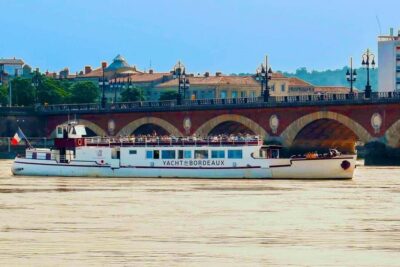
Early on, the guide points out the Stone Bridge (Pont de Pierre) as well as Pont Chaban-Delmas and Pont d’Aquitaine. From the water, you see how the spans connect the city’s layers. Up close, these bridges don’t just look impressive; they help you understand how Bordeaux channels movement between neighborhoods and waterfront districts.
What makes this part valuable is the mix of scale and explanation. The guide’s stories turn the bridges into more than scenery. You start noticing details like where the stonework sits, how the river bends, and why the riverfront matters to the city’s history.
One practical note: a lot happens quickly in a short cruise. If you’re the type who likes to take photos nonstop, you’ll still get solid shots, but keep an eye on where the guide is directing your attention. When the guide talks, you’ll usually be passing the exact view being described.
And yes, you’ll likely get that classic “from the water” perspective that makes Bordeaux feel instantly understandable. After the bridges, the cruise shifts into older-center landmarks and the wine-city theme, so the navigation through the city stays coherent.
Deeper into the old port, more history walks



Place de la Bourse and Cailhau Gate from the water
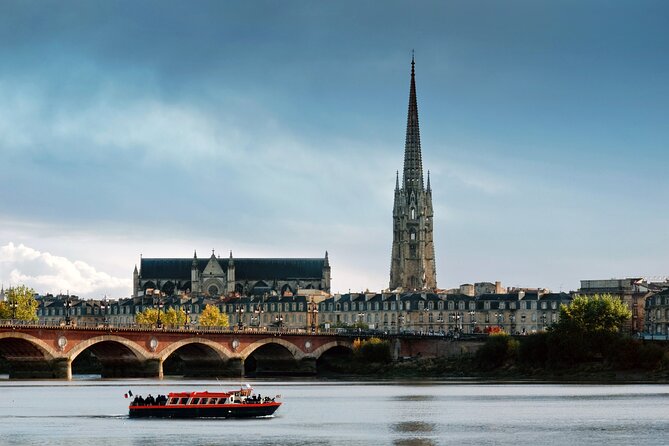
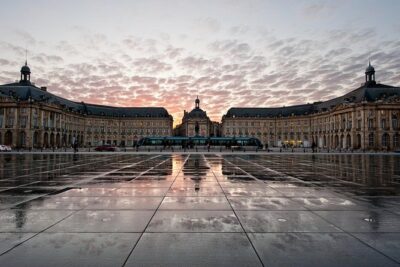
After the big bridge segment, you move into the historic-core mood. This is where the UNESCO idea feels real—not just a label, but a perspective.
You’ll pass by Place de la Bourse, one of those spots that looks dramatic from land and becomes even more symmetrical from the river approach. The guide uses the moment to connect the waterfront to the city’s story, so you don’t just skim past a landmark.
Then there’s the Cailhau Gate, which you’ll discover as you continue along the route. From the Garonne, gates can look different than you expect. They feel taller, more “contained,” and more tied to defense and passage than to modern sightseeing.
This part of the cruise is a good example of why river tours can be better than quick walking loops. When you’re walking, you’re always changing angles and context. On the boat, the landmarks stay in the same frame long enough for the guide to make sense of them.
If you care about UNESCO facades and historic architecture, this segment helps you “see” what makes Bordeaux notable. You come away with a clearer idea of what to look for later if you decide to explore more on land.
Place des Quinconces and Jacques Chaban Delmas Bridge: angles you can’t fake
One of the best tricks a river cruise plays is giving you angles that you can’t casually recreate. You’ll get Place des Quinconces in view, plus Jacques Chaban Delmas Bridge.
Place des Quinconces is one of those locations that tends to look like a big civic space. From the water, it becomes a composition—edges, open areas, and the way city planning shows up in the skyline. It also helps you connect the “center” to the river, which is where Bordeaux’s life really runs through.
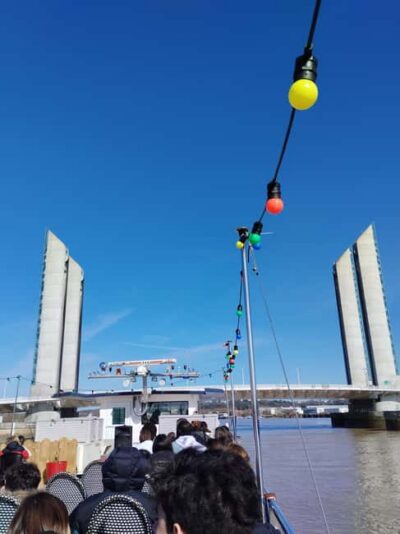
Then Jacques Chaban Delmas Bridge adds another layer. Earlier bridges gave you the structural excitement; this one reinforces the idea of Bordeaux as a city of crossings. The guide’s narration makes the bridge segment feel like part of a single story arc rather than random sightseeing stops.
This section is also where you’ll get a sense of pacing. The overall cruise is about an hour, so you won’t have long, slow photo opportunities at every stop. Instead, you get a sequence of “watch-and-learn” moments, and that’s why it works for first-time visitors.
If you want to linger at any single spot afterward, you’ll know where to point your feet. That’s one of the hidden values of short guided cruises: they help you prioritize your time on the ground.
Wine city focus: Cité du Vin, canelés, and the architecture story
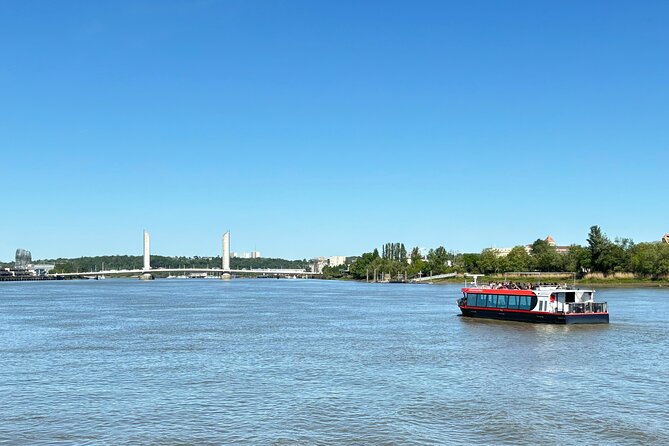
Bordeaux isn’t only historic. It’s also wine culture with a strong modern footprint. That’s why the cruise includes a focused look at the wine-city theme and the Cité du Vin area.
You’ll learn more about the Cité du Vin and its atypical architecture. From the water, it’s easier to notice how the building sits in relation to the riverfront and nearby landmarks. The guide doesn’t treat it like a random photo stop; it’s framed as part of Bordeaux’s evolving identity.
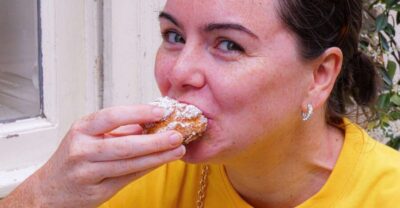
And then comes the part that turns the cruise into something you can taste. You’ll taste Baillardran canelés and hear their history. Canelés are one of those Bordeaux signifiers that many people recognize by name but don’t really understand until someone connects them to local tradition.
On board, bottled water is included, and the bar is open during the break, so you have options if you want to add a glass alongside the treat. It’s a simple pairing, but it makes the whole “wine city” angle feel complete.
The key value here is balance. You’re not only looking at old stone or big bridges. You’re also getting a quick, guided introduction to why Bordeaux’s wine story still drives design, tourism, and architecture.
Guide energy, English clarity, and how to get the best experience
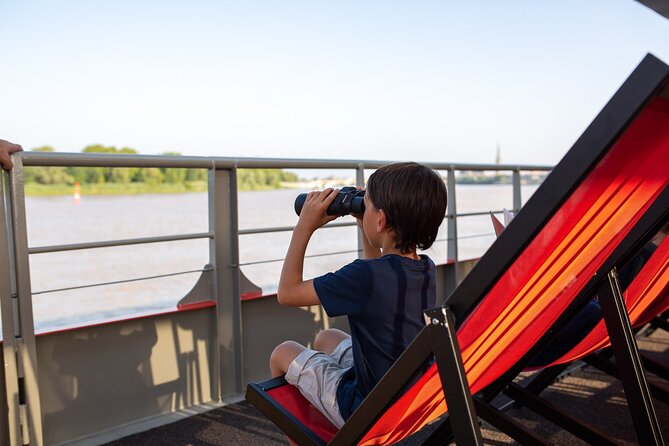
This tour lives or dies on narration quality. When it lands well, it’s excellent—engaging, timely, and funny in the way good guides can be without turning it into a performance.
Some guide moments have been highlighted as especially engaging, with clear direction and a sense of humor. Names like Rory and Iona show up as examples of how lively the commentary can feel. That matters because you’re moving through different landmarks fast, and the guide helps you connect the dots.
The caution is that audio and language can vary. If the speaker system isn’t clear for your section of the boat, you’ll miss details. And even when English is available, the distribution can tilt more toward French than you expect.
So here’s how you make it work for yourself:
- Choose a seat where you can hear the mic clearly, not just where you can see
- If you’re English-only, keep one ear on the guide and one eye on the landmarks, so you still learn even if translation dips
- Ask yourself if you prefer a broad overview. This cruise is built to cover many sights quickly, not to linger on UNESCO specifics for a deep lesson
If you’re the type who needs every word translated, you may find this style frustrating. If you’re happy to use the cruise as a guided visual primer, it’s a great fit.
Price and value: $16.87 for a guided river sampler
At about $16.87 per person, this is priced like a budget-friendly Bordeaux orientation tool. The value comes from what you actually get for the money: a guide, water, air-conditioned comfort, a restroom, and a short bar break—plus the canelé tasting.
The main “cost” you’re paying isn’t money. It’s attention. You’ll want to be present during the guide’s narration because the time window is short. But if you handle that, you’ll leave with a solid mental map of the city’s waterfront story.
Also, this is a good option when you don’t want to overcommit. You’re spending about an hour, so it’s easier to pair with a walking plan afterward. You can use the cruise to spot what you want to return to, rather than guessing blindly.
And because it’s limited to a maximum of 150 travelers, it’s not a mass event in the same way a huge sightseeing bus can be. It’s still not private, but it tends to feel like a guided group cruise rather than chaotic tourism.
Finally, the weather dependency is real. With good conditions, the scenery payoff is higher. If they cancel due to poor weather, you’re offered another date or a full refund, so you’re not trapped.
Should you book this Bordeaux UNESCO river cruise?
I’d book it if you want a fast, guided way to understand Bordeaux’s waterfront and its standout landmarks. The combination of bridge views, the historic-center passes like Place de la Bourse and Cailhau Gate, and the wine-world focus around Cité du Vin makes this feel like a smart first-day experience.
Skip it (or consider pairing it with more land time) if you’re very sensitive to unclear audio or you need the tour content in English nonstop. The cruise is designed for coverage, not deep drilling at each UNESCO site, so you may want a longer walking or museum plan if you crave more detail.
If you’re on a time budget and want to leave Bordeaux with your bearings and a couple of tasty takeaways, this one-hour river cruise is a strong, practical choice.
FAQ
How long is the Bordeaux UNESCO guided cruise?
It’s approximately 1 hour.
How much does it cost per person?
The price is $16.87 per person.
Where does the cruise start?
It starts at the Pontoon of honor, Quai Richelieu, 33000 Bordeaux, France.
Is the tour offered in English?
Yes, the experience is offered in English.
Do I need a printed ticket?
No. It’s a mobile ticket.
What’s included in the price?
Included items are the guide, bottled water (fresh filtered water), an air-conditioned vehicle, a restroom on board, and a bar that’s open on board during the break.
Are snacks included?
Snacks are not included.
How many people can be on the tour at once?
The maximum group size is 150 travelers.
Is the cruise dependent on weather?
Yes. It requires good weather. If it’s canceled due to poor weather, you’ll be offered a different date or a full refund.
Can I cancel for a full refund?
Yes, you can cancel up to 24 hours in advance for a full refund. If you cancel less than 24 hours before the start time, the amount paid is not refunded.
More Tour Reviews in Bordeaux



The Old Port, Up Close

Out on the Garonne

Just Added: Fresh Bordeaux Reviews
Garonne River Cruises, compared.
 ★ 4.5River Garonne Cruise with Glass of Wine and CaneléFrom $223,630 reviews
 ★ 4.3Guided River CruiseFrom $171,014 reviews
 ★ 4.4River Cruise with Commentary, Wine and CaneléFrom $22594 reviews
 ★ 4.0Prestige Commented Cruise glass of wine and Canelé in BordeauxFrom $22517 reviews
 ★ 4.52-Hour River Dinner CruiseFrom $81365 reviews
 ★ 4.6Lunch CruiseFrom $69241 reviews
 ★ 4.3Guided Wine and Canelé Discovery CruiseFrom $22157 reviews
 ★ 4.5Garonne River Yacht Cruise with BrunchFrom $64112 reviews
Browse the lists this tour appears in