
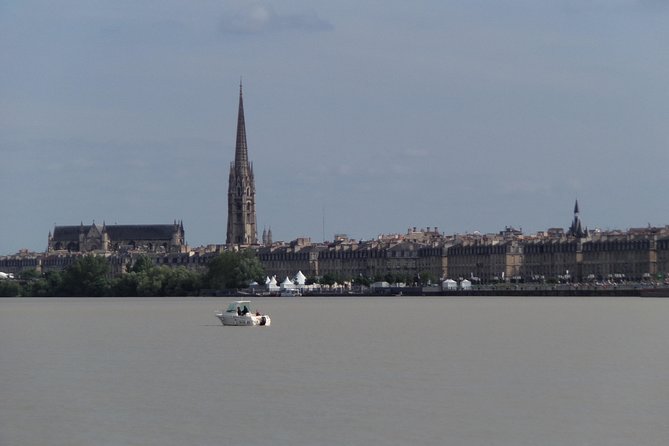
Reviewed · PRIVATE BORDEAUX CITY TOURS
Private tour of Bordeaux by a Bordeaux historian
Bordeaux makes sense when someone explains it. This private, 2-hour walk with historian Hubert is built for clear storytelling and English narration, so the city’s big landmarks feel connected instead of random stops. I like the pace here: it’s compact, street-level, and designed for questions.
What I like most is the payoff: you spend time at major civic and cultural spots like Place de la Bourse and the Grand Théâtre, not just quick photo moments. You also get plenty of time on famous streets and squares that shape everyday Bordeaux life.
One thing to consider: it’s not an “inside-everything” tour. Even though you pause at places like the city hall, any interior access that costs money is not included. If you’re hoping for museums or ticketed attractions, plan on viewing most sights from outside.
In This Review
- Key highlights you’ll actually notice
- Why a Bordeaux historian turns street corners into a story
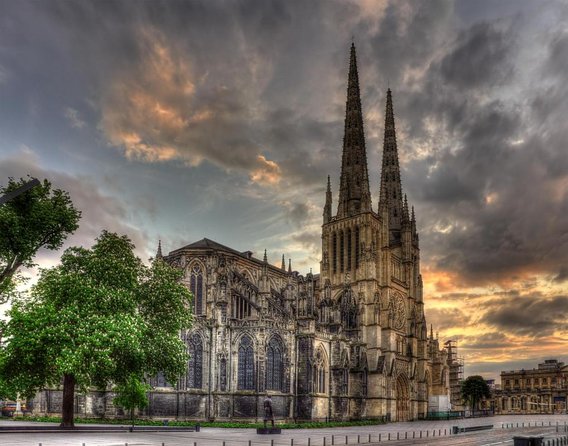
- Getting oriented at Cathédrale Saint-André (and why that matters first)
- Hotel de Ville stop: a quick look at the civic heart
- Promenade Sainte Catherine on foot: the street that shapes the mood
- Utopia, Place Camille Jullian: the “wait, what is that?” kind of pause
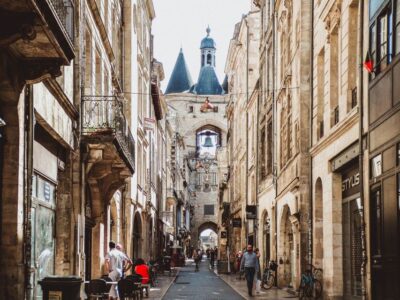
- Grosse Cloche and Church of Saint Eloi: character in the details
- Porte Cailhau: a city gate stop that feels like a chapter break
- Eglise St Pierre: a calm moment before the major squares
- Place de la Bourse and Miroir d’eau: where trade meets reflection
- Grand Théâtre: culture with scale
- Quinconces finish: Monument aux Girondins and a strong wrap-up view
- Price and value: what $108.14 per group really means
- What you should be ready for (and who this tour fits best)
- Booking basics that matter day-of
- Should you book this Bordeaux historian tour?
- FAQ
- How long is the Bordeaux private tour with a historian?
- How much does it cost, and how many people can be in the group?
- Is the tour private?
- Where do we meet, and where does the tour end?
- What language is the tour offered in?
- Are there any paid tickets needed during the stops?
- How soon will I get confirmation after booking?
- Can I cancel for a full refund?
Key highlights you’ll actually notice
- A historian who connects dots between buildings, streets, and how Bordeaux thinks about itself
- 2 hours, private group of up to 14, so it doesn’t turn into a cattle-car shuffle
- Free entry for most stops, with only one notable exception (city hall)
- Prime central sights on one route: Saint-André, Porte Cailhau, Place de la Bourse, Grand Théâtre, Quinconces
- Ending at the Monument aux Girondins, a strong visual finish instead of a random curb
Your own guide, more private Bordeaux days
- Private – Best of Bordeaux Walking Tour + Glass of Bordeaux Wine★ 5.0 · 240 reviews
- Bordeaux City – Private Guided Walking Tour with Local Sophia★ 5.0 · 164 reviews
- Bordeaux Walking Tour with a Local Private Guide★ 5.0 · 97 reviews
- Bordeaux Sightseeing Private Sidecar Guided Tour★ 5.0 · 68 reviews
Why a Bordeaux historian turns street corners into a story
Bordeaux can look elegant and orderly, but that’s exactly why it helps to have a guide who explains what you’re seeing while you’re still standing in front of it. This tour keeps you in the city center and runs on a simple idea: architecture and public spaces are never just decoration. They reflect how power, trade, and culture show up in everyday life.
Because it’s private, you stay with your own group only. With a maximum size of up to 14, you’re not stuck waiting for the slowest walker to catch up, and you’re not shouting over other languages or other families. The feel is more like a smart local walk than a staged “checklist” tour.
I also like that the tour is offered in English, and the guide’s style comes across as clear and structured. The reviews point to Hubert’s ability to explain big themes in short, precise words and adjust to different kinds of groups, including students. That matters, because it’s easy for history walks to turn into long lectures. This one is built for understanding as you go.
Getting oriented at Cathédrale Saint-André (and why that matters first)
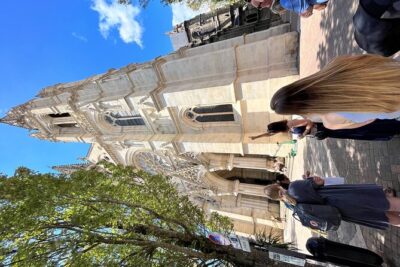
You meet right where Bordeaux starts to feel like a real city, not just postcard views: Cathédrale Saint-André de Bordeaux on Pl. Pey Berland. This is a strong first stop because cathedrals and main squares naturally set the tone for how cities organize space around important institutions.
The benefit of starting here is practical. After you arrive, you can quickly understand what direction you’re headed, what the major streets connect to, and what kind of landmarks you’ll keep seeing. You also get an early anchor so the rest of the route doesn’t feel like you’re hopping between unrelated places.
Expect a walk that’s mostly outdoors and on foot, with short, focused pauses. The whole experience is about 2 hours, so the guide keeps moving while still giving you time to look up, not just forward.
Hotel de Ville stop: a quick look at the civic heart
Next comes Hotel de Ville de Bordeaux (City Hall). You’ll have about 10 minutes here. This is a classic “civic Bordeaux” moment—government buildings sit at the intersection of public life and identity.
One practical consideration: admission ticket isn’t included. That doesn’t mean you’ll feel cheated, but it does mean the stop is mainly about what you can see from outside and around the building. If you love interior tours and paid exhibits, you might want to pair this with a separate museum visit.



Promenade Sainte Catherine on foot: the street that shapes the mood
Then you move into Promenade Sainte Catherine (Saint Catherine Street) for about 5 minutes. This kind of stop is more than scenery. Shopping streets and promenades tell you how the city breathes day-to-day: where people walk, pause, meet, and flow from one district to another.
What I appreciate here is the timing. After city hall, you shift to a human scale street. It’s a good reset. If you’re traveling with kids, grandparents, or anyone who gets tired of constant talking, short street time helps keep the energy balanced.
Also, since this is a private tour, you can ask quick questions as you go—about what you’re seeing, why that street matters, or even what to try in the area after the walk.
Utopia, Place Camille Jullian: the “wait, what is that?” kind of pause
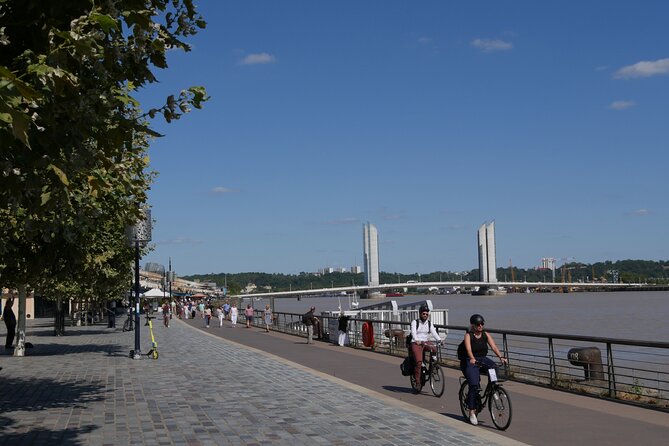
You’ll spend around 15 minutes at Utopia in Place Camille Jullian. The name alone makes you look twice, and that’s the point. A good historian doesn’t just point at famous monuments; they help you notice what’s unusual.
This is a stop where you’re likely to get context that makes the space feel intentional instead of random. Even if you’re not a deep-architecture person, these mid-route “spark” moments make the whole tour more memorable because you’ll remember something specific when you leave.
Grosse Cloche and Church of Saint Eloi: character in the details
After Place Camille Jullian, the route turns toward Grosse Cloche and the area around the Church of Saint Eloi, with about 15 minutes total. Even without stepping inside, spots like this give you a sense of how Bordeaux clusters different kinds of landmarks together—civic features, religious spaces, and street-level routes all interacting in one walk.
I like having a church stop in the middle of a city-center circuit. It gives the tour variety. It also helps you calibrate what counts as important in the city’s layout, not just what looks impressive in a single frame.
Porte Cailhau: a city gate stop that feels like a chapter break
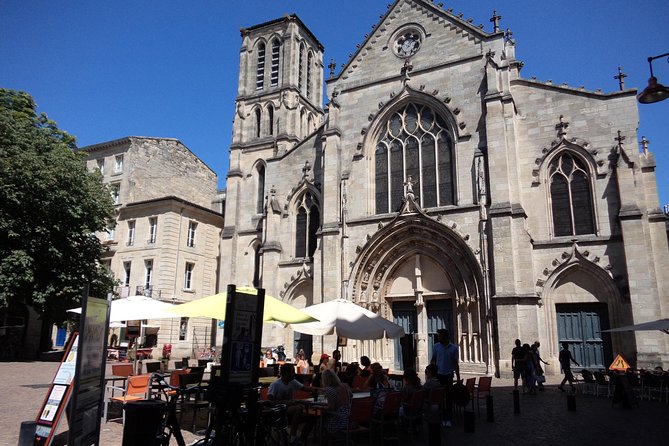
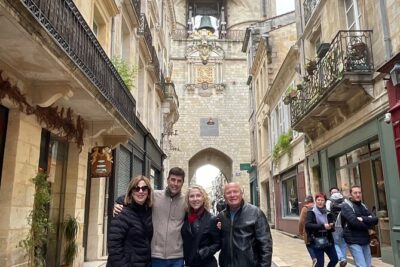
Next is Porte Cailhau for around 10 minutes. City gates are a nice “chapter break” on a walking tour. They’re the kind of landmark that naturally makes you think in directions—how people would have moved through the city, and how the city presents itself at boundaries.
This is also a practical photo moment, and the time length is enough to step back, look around, and re-orient yourself before continuing.
Eglise St Pierre: a calm moment before the major squares
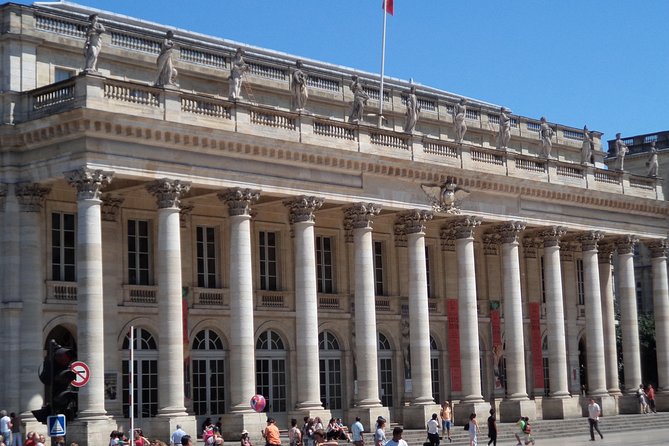
Then you pause at Eglise St Pierre for about 10 minutes. Churches often provide a quieter rhythm in the middle of busy city streets. Even if you don’t go inside, the surrounding public space usually feels different than a shopping street or a commercial square.
This stop helps you recharge. It also gives the guide room to connect earlier sights (cathedral and gates) to later ones (the big civic and cultural squares) in a way that feels chronological rather than scattered.
Place de la Bourse and Miroir d’eau: where trade meets reflection
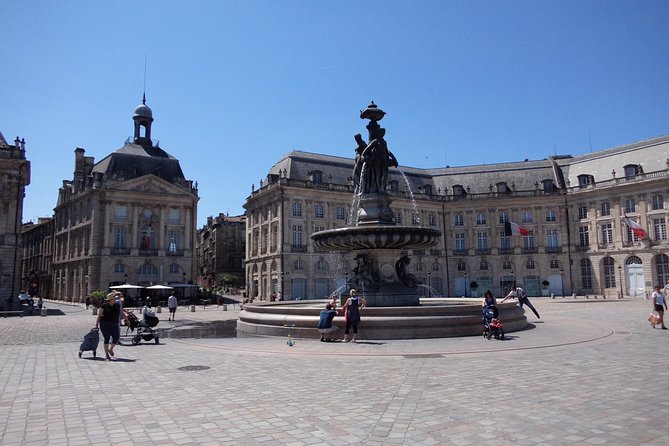
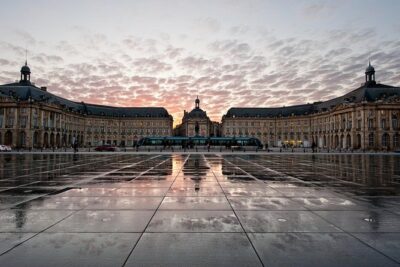
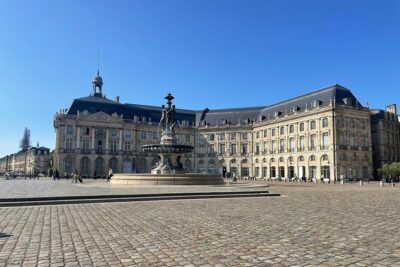
One of the most worthwhile parts of this walk is Place de la Bourse, with 15 minutes and a focus on the stock exchange square and water mirror (Miroir d’eau). This is the kind of landmark that works on two levels.
First, it’s visibly iconic, so you’ll immediately understand why it’s a centerpiece. Second, it turns the guide’s job into something concrete: you’re standing in a space tied to commerce, and you can see how the city uses strong open-plan design.
If you like photography, this is where you’ll probably slow down. A water mirror invites reflection, and it’s one of those sights where your eyes naturally notice details you’d miss if you were just speed-walking.
Grand Théâtre: culture with scale
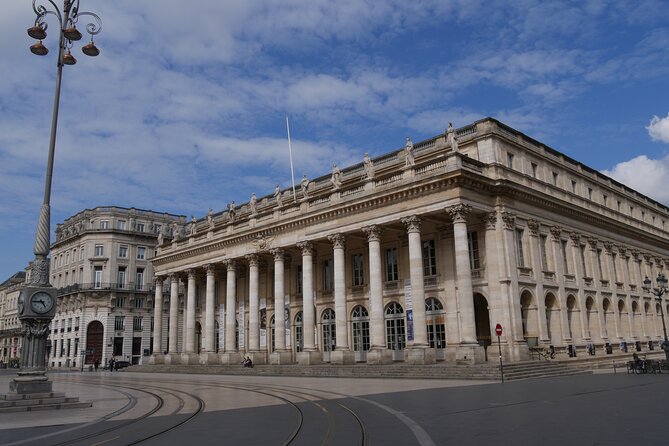
The route continues to the Grand Theatre (opera area) for about 15 minutes. The theatre gives you a different kind of Bordeaux landmark: not just buildings tied to civic life or markets, but a cultural institution that signals how the city wants art to matter.
I like that this is a planned stop of real time, not a rushed “look and go.” If you’re the type who likes to stand back and take in proportions, the time here helps.
Also, because the tour stays compact, you can compare the theatre’s role to what you saw earlier at Place de la Bourse. It helps you understand Bordeaux as a city that organizes itself around multiple public “stages”: commerce, government, worship, and performance.
Quinconces finish: Monument aux Girondins and a strong wrap-up view
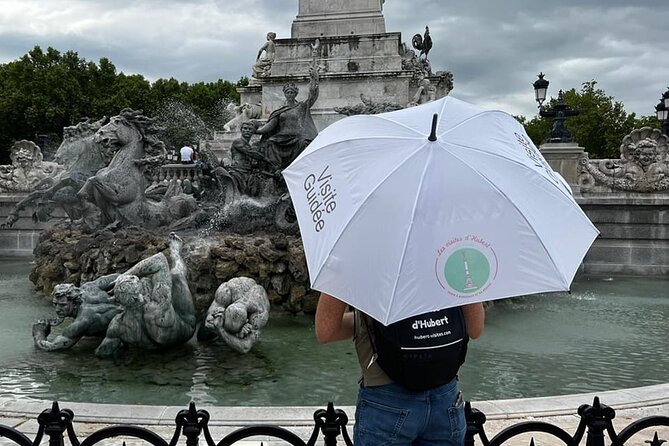
The final stretch lands at Esplanade des Quinconces, with about 10 minutes, and then you end at the Monument aux Girondins on Pl. des Quinconces. This is a good finish because you leave with a clear visual destination instead of ending back where you started.
Finishing at Quinconces also works well for practical reasons. It’s an easy place to keep exploring afterward with less mental effort. Once you’ve already seen how civic monuments frame public spaces, the last stop feels like the tour’s conclusion: Bordeaux taking a stance, literally in stone.
Price and value: what $108.14 per group really means
At $108.14 per group (up to 14) for about 2 hours, this tour can be a strong value, especially if you’re traveling with a group of friends or family.
Here’s the simple math: if you book with the maximum 14 people, the cost is about $7.70 per person. If you’re a smaller group, the per-person price rises, but you still get a private setup and an expert guide for the full time.
This is the kind of tour that tends to be worth it when you care more about understanding than ticking boxes. If you just want selfies, you’ll find cheaper ways to hit the same landmarks. But if you want your walk to make sense—why each place is there and what the city is communicating—you’re paying for interpretation and pacing.
What you should be ready for (and who this tour fits best)
This is a private tour/activity, meaning only your group participates. With a group up to 14, it’s ideal if you want a guided experience without the chaos of a large public tour.
It also says most travelers can participate, and it’s near public transportation. So if you’re hopping around Bordeaux by transit, you should be able to plan around it without too much friction.
This is a great fit if:
- you want an English-speaking historian-style walk through central Bordeaux
- you like guided context more than museum tickets
- you enjoy a compact route with major landmarks at a human pace
- you want time-efficient sightseeing that still feels like more than a drive-by
It may be less ideal if:
- you expect multiple paid interior admissions
- you want a wine-focused program (this route is centered on city landmarks)
- you prefer long museum stops rather than short, street-level pauses
Booking basics that matter day-of
You receive confirmation subject to availability, and you’ll hear back within about 48 hours. The tour uses a mobile ticket, which is usually convenient when you’re walking and checking in on the go.
The tour starts at Cathédrale Saint-André de Bordeaux (Pl. Pey Berland) and ends at the Monument aux Girondins (Pl. des Quinconces). That’s helpful for planning the rest of your afternoon. You’ll likely want to schedule your next activity nearby, since you’ll end at a major landmark instead of returning to the start.
Should you book this Bordeaux historian tour?
I’d book it if you want a smart, English-friendly way to understand Bordeaux’s public spaces in a short window. The route hits high-recognition landmarks—Saint-André, Porte Cailhau, Place de la Bourse with Miroir d’eau, the Grand Théâtre, and Quinconces—while keeping stops timed enough that you’re not bored or rushed.
It’s also a good choice for value if you can share the group cost. With up to 14 people, it can work out very reasonably per person, and you still get a private experience rather than joining a crowded bus tour.
If you’re traveling with a group that wants interiors and ticketed attractions, or you only care about quick photos, you might want to pair this with another add-on. But for a historian-led walk that helps you see the city as one connected story, it’s a solid bet.
FAQ
How long is the Bordeaux private tour with a historian?
The tour lasts about 2 hours.
How much does it cost, and how many people can be in the group?
It costs $108.14 per group, for up to 14 people.
Is the tour private?
Yes. It’s a private tour/activity, so only your group participates.
Where do we meet, and where does the tour end?
You meet at Cathédrale Saint-André de Bordeaux (Pl. Pey Berland) and end at the Monument aux Girondins (Pl. des Quinconces).
What language is the tour offered in?
The tour is offered in English.
Are there any paid tickets needed during the stops?
Admission is free for most stops. The Hotel de Ville de Bordeaux stop notes that an admission ticket is not included.
How soon will I get confirmation after booking?
Confirmation is received within 48 hours of booking, subject to availability.
Can I cancel for a full refund?
Yes, you can cancel free of charge up to 24 hours in advance for a full refund.
More Tours in Bordeaux



More Tour Reviews in Bordeaux
Just Your Party, Around Bordeaux


Just Added: Fresh Bordeaux Reviews

Private Bordeaux City Tours, compared.
 ★ 5.0Private – Best of Bordeaux Walking Tour + Glass of Bordeaux WineFrom $102240 reviews
 ★ 5.0Bordeaux City – Private Guided Walking Tour with Local SophiaFrom $104164 reviews
 ★ 5.0Bordeaux Walking Tour with a Local Private GuideFrom $11497 reviews
 ★ 5.0Bordeaux Sightseeing Private Sidecar Guided TourFrom $7268 reviews
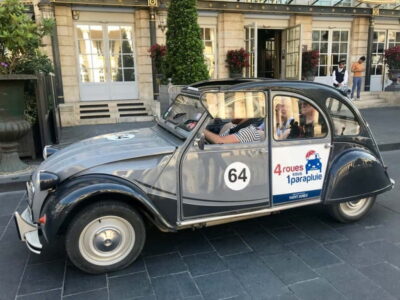 ★ 4.7Private Tour in a Citroën 2CVFrom $10964 reviews
 ★ 4.6Exclusive Private Guided Walking TourFrom $21750 reviews
 ★ 4.9The essential in Bordeaux, private tour with a localFrom $5948 reviews
 ★ 5.0Bordeaux Médoc Region Private Wine Lovers Tour with Chateau Visits & TastingsFrom $65940 reviews
Browse the lists this tour appears in