
Reviewed · BORDEAUX WALKING TOURS
Bordeaux Walking Tour with a Local Private Guide
Bordeaux can feel like a postcard. This tour adds the captions. You get personal guide attention and a tight route that beats aimless wandering. The payoff for me is learning why the city is built the way it is, not just spotting pretty buildings.
I also like that it’s an active walking format you can use to orient yourself fast. The one trade-off: you’re mostly viewing monuments from the outside, and ticketed entry is only included at one stop (unless you ask for more). A few past guests also flagged communication problems, so I’d confirm details the day of.
In This Review
- Key stops and what makes them work
- Key things to know before you go
- Why a Bordeaux walking tour with a private guide pays off
- The route: from Place Pey Berland to the Monument aux Girondins
- Cathedrale Saint-André and Pey-Berland’s separate belfry
- Utopia at Place Camille Jullian and the medieval clues around you
- Porte Cailhau: a medieval gateway with shifting rulers
- Eglise St Pierre and the pilgrimage link to Santiago de Compostela
- The Water Mirror and Pont de Pierre photo moment
- Place de la Bourse: port history where you’ll plan your next days
- Grand Theatre and the Golden Triangle
- Monument aux Girondins: revolution history in one last landmark
- Price and time: is $114.89 a good value for your style of travel?
- Practical tips so this walk feels easy (not stressful)
- Should you book this Bordeaux walking tour?
- FAQ
- How long is the Bordeaux walking tour?
- Is this tour private or shared?
- Is the tour in English?
- Are there tickets included for the landmarks?
- Does the tour include going inside churches and monuments?
- Where does the tour start and end?
- Is this tour suitable for people who want an active walking experience?
- What if the weather is bad?
- What’s the cancellation timeframe?
Key stops and what makes them work
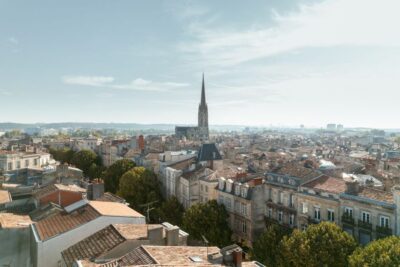
You’ll start near Place Pey Berland and end at the Monument aux Girondins, walking through the old-core sights that define Bordeaux’s layers of power—from medieval ports to revolution-era monuments. Expect frequent photo chances, short segments at each landmark, and a guide who connects the dots as you go. In other words: you don’t just see Bordeaux, you learn how to read it.
Bordeaux at walking pace, more routes
- Private – Best of Bordeaux Walking Tour + Glass of Bordeaux Wine★ 5.0 · 240 reviews
- Professional – Bordeaux Wine and Cheese Tasting with a walking tour★ 5.0 · 218 reviews
- 2-Hour Walking Tour of the City’s Iconic Sights and History★ 4.0 · 207 reviews
- Bordeaux: Mystery and Myths Walking Tour★ 4.8 · 187 reviews
Key things to know before you go
- Private, not crowded: only your group joins your guide
- 2 or 3 hours: enough time for highlights without turning into a marathon
- Exterior views: most sights are pass-by only unless you request entry
- A built-for-walking route: good for mobile travelers who like moving
- Weather matters: poor weather can trigger a reschedule or refund
Why a Bordeaux walking tour with a private guide pays off
If you’ve ever walked around a European city and felt like you were missing half the story, this style of tour is built for you. Bordeaux looks polished and elegant, but it’s also layered—different eras left their fingerprints on the same streets. A local guide helps you notice what you’d otherwise gloss over: how structures relate to each other, why certain buildings were placed where they were, and what big events changed over time.
I like that the tour is private. That means you can ask follow-up questions without waiting for a group schedule to catch up. It also means your guide can adjust the pace—useful if you’re traveling with kids, grandparents, or anyone who needs more time at photos. And several guides in guest comments stood out for being friendly and very capable of answering questions, including one guide, Guadalupe, who also brought wine-region expertise into the conversation.
The other big advantage is that you’re on foot. You’ll cover key sights across central Bordeaux without needing a bus ride, and you’ll leave with a mental map you can build on later. For many first-time visitors, that’s the difference between a “nice day” and a “this city clicked.”
The route: from Place Pey Berland to the Monument aux Girondins
This tour follows a classic central Bordeaux arc. You begin at the Statue of Jacques Chaban Delmas at Pl. Pey Berland, then work your way toward Pl. des Quinconces, ending at the Monument aux Girondins (your actual finish can depend on what you request).
The timing is designed for real walking and short history stops. It’s listed as about 2 to 3 hours, depending on the option you choose. In practice, you’ll spend around 5–15 minutes at each major landmark, which is long enough for context but short enough to keep the day moving.
Here’s the rhythm you can expect:
- brief meet-and-setup time at the start
- short, focused explanations at each site
- photo stops that also function as orientation points
- guidance on where to go next in Bordeaux after you finish
One note for your expectations: most of the route is exterior viewing. The guide will show you what to look for and where the story is visible in the stone and street layout, but you’re not automatically going inside most monuments.
Your own guide, more private Bordeaux days
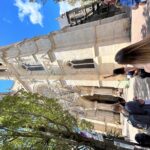
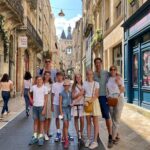
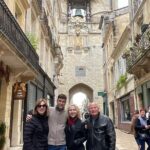


Cathedrale Saint-André and Pey-Berland’s separate belfry
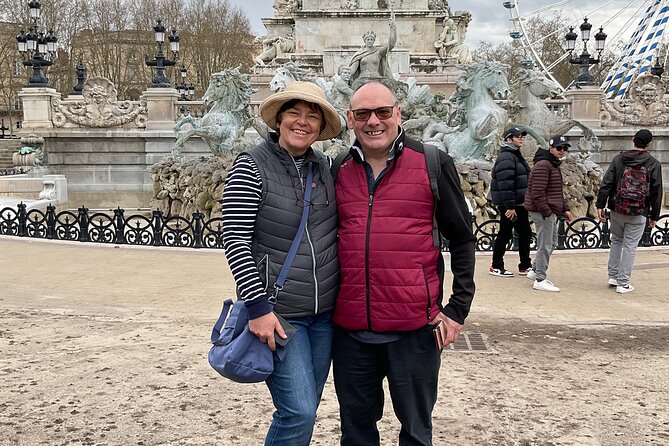
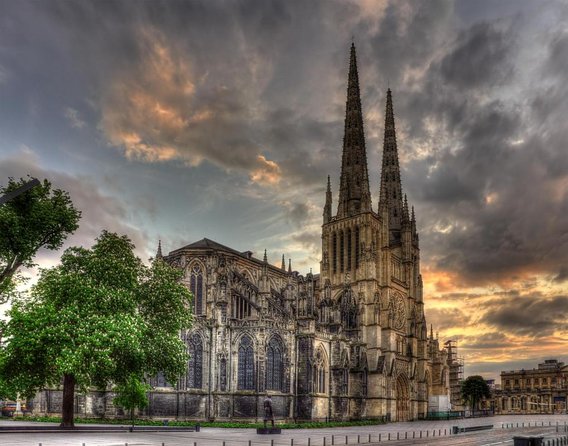
Your tour opens at Place Pey Berland, right where the city tells you what mattered. The Cathedrale Saint-André dates to 1096, and your guide will point out the history and architectural cues while you take in the cathedral from the square.
What I love about this first stop is how it sets the “Bordeaux grammar.” Once you see how one major religious structure anchors the area, the rest of the route feels more connected. You’re also in a real public space, not tucked away on the edge of town.
Then you shift to the Tour Pey-Berland (a 15th-century belfry). A key detail: this tower was built separately next to the cathedral. That’s not just trivia—it’s a clue about the priorities and engineering decisions of the time. Your guide will explain why that separate placement happened, and it gives you a better sense of how these buildings operated together.
If you were hoping for interior access right away, temper expectations. Admission inside isn’t included unless requested, and this route is mainly about exterior sights.
Utopia at Place Camille Jullian and the medieval clues around you
Next you’ll stop at Utopia in Place Camille Jullian. This is one of those places where the building catches your eye, but the story comes from what your guide notices: how it fits into the square and what the area has held onto across centuries.
Right after that, you’ll head to Place Saint-Projet. Here, the medieval Saint Projet church once stood. The guide will help you spot the old bell tower that remains. This is a great stop if you like “spot-the-evidence” sightseeing. Even if the original structure isn’t intact, the surviving elements still show you how the city has changed over time.
These two stops are short, but they’re smart. They teach you how Bordeaux uses space—squares that feel open, yet often hide layers underneath. For a walking tour, that kind of storytelling is exactly what you want.
Porte Cailhau: a medieval gateway with shifting rulers
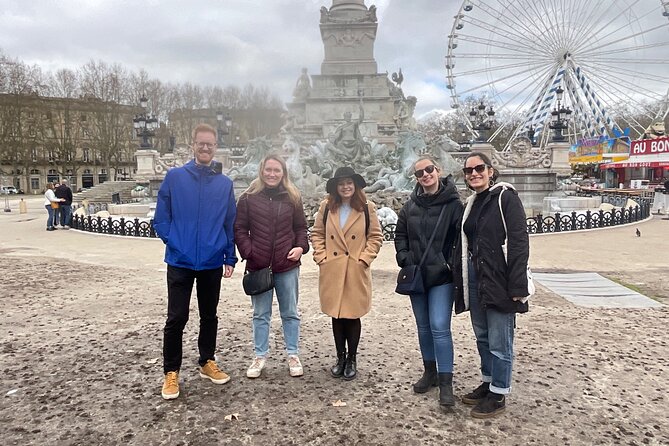
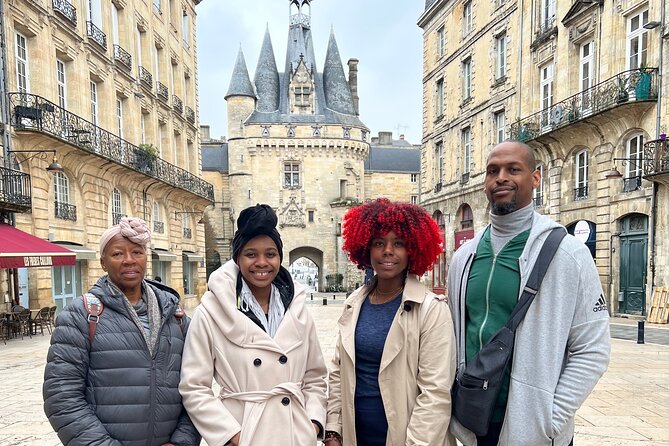
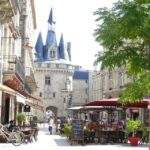
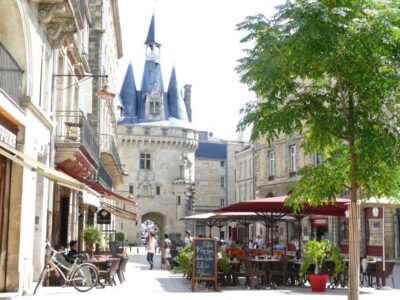
Then comes one of the most dramatic visual moments on the route: Porte Cailhau, a medieval gateway built in 1495. If you like stonework and city defenses, you’ll enjoy this part because your guide ties the structure to political history.
The explanation here is about power changing hands. You’ll hear the story moving through the independent state of Guyenne, then English rule, and finally what leads into current French rule. A gateway like this isn’t just architecture—it’s a record of who controlled entry and what Bordeaux meant strategically.
You’ll typically view it from the outside, but that works. You can still take in the scale and get the “city gate” feeling without needing to pay for entry. Just keep your camera handy; this is an easy photo win.
Eglise St Pierre and the pilgrimage link to Santiago de Compostela
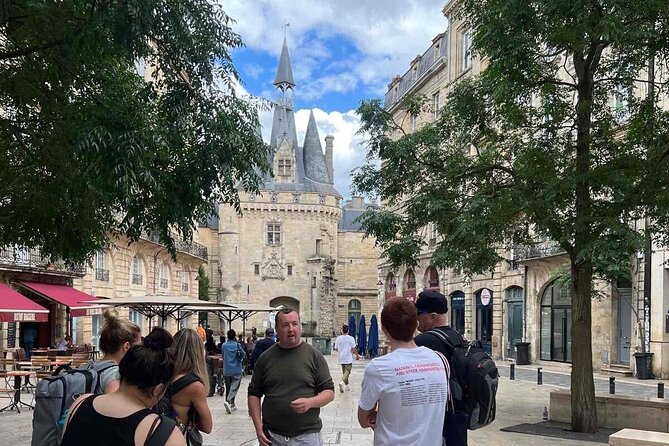
After Porte Cailhau, you’ll reach Eglise St Pierre, connected to a very specific detail: it was the first port of the city, dating back to the 12th century. This stop is where Bordeaux starts to feel bigger than its own borders.
Your guide will also connect the church area to the pilgrimage to Santiago de Compostela. That’s the kind of story that turns a single stop into a broader European theme—religion, travel routes, and why coastal or port cities mattered. Even if you don’t know the details going in, the guide’s explanation should give you the “why” without making it feel like a textbook.
Again, entrance isn’t included by default. So if you want to go inside, you’ll need to ask your guide, and you may have extra costs depending on what’s available.
The Water Mirror and Pont de Pierre photo moment
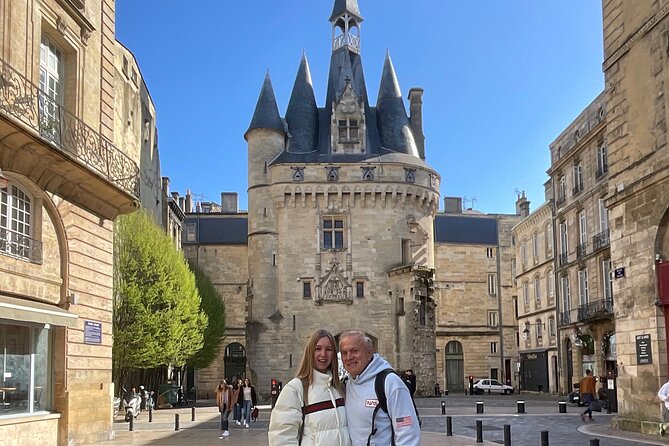
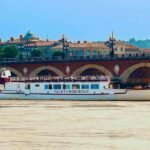
One of the most photographed sights in Bordeaux is the Water Mirror. This is a classic “stop for a photo, then understand what it means” moment. You’ll also see Pont de Pierre in the distance, which makes the framing feel extra satisfying.
What I like about this stop is the pacing. You’ve had gates, churches, and squares. Here you get a calmer visual beat—then your guide ties it back to the city’s layout and river presence. And if you’re planning your own walking follow-up later, this location gives you a strong reference point.
Admission here is listed as free, so you won’t have ticket decisions hanging over you.
Place de la Bourse: port history where you’ll plan your next days
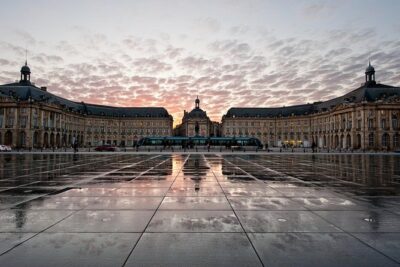
Next is Place de la Bourse, a key square on the quays with 18th-century neo-classical character. This is the focal point of the port area, and your guide will talk about the port history of Bordeaux.
One practical win: the admission ticket is included at this stop. That’s the only clearly included monument admission on the listed route, so it’s worth paying attention to how it fits into your day.
Your guide also uses this moment to do something helpful for your future plans: you can take notes and get recommendations for what to do over the coming days. After you learn the city’s “why,” you can use that context to choose the right kind of Bordeaux experience next—whether that means more architecture, more museums, or wine and food exploration.
Grand Theatre and the Golden Triangle
From the port square, you move toward the Grand Theatre, built in the late 18th century. This is described as the heart of Bordeaux’s Golden Triangle, and your guide will explain why the theater sits at that focal point.
This stop is more about understanding urban design. Bordeaux isn’t just pretty; it’s planned. The theater becomes a reference for where public life concentrated and how the city’s center shaped movement and identity.
You’ll view it from the outside by default. Admission isn’t listed as included, so again, it’s about exterior architecture and context.
Monument aux Girondins: revolution history in one last landmark
Finally, you finish at the Monument aux Girondins at Pl. des Quinconces. This is where the tour turns toward political history. Your guide will share what you’re seeing and connect it to the French Revolution.
This last stop matters because it broadens your sense of Bordeaux beyond medieval and port stories. You end with a modern-looking monument that still ties back to power and public life—the same theme you saw earlier, just in a different era.
The tour is listed as ending here, but it also says the ending can depend on what you request. So if you want a specific drop-off area that makes transit easier, ask your guide early.
Price and time: is $114.89 a good value for your style of travel?
At $114.89 per person, the best way to judge value is not just the price tag. It’s whether you’ll actually use the guide’s time to learn and plan.
You’re paying for:
- a private guide (only your group)
- a 2 or 3 hour walking format
- visits to the listed landmarks in an efficient route
- local recommendations built around your questions
So this is best value if you’ll do two things: ask questions and use the info right away. If you like history and urban design, you’ll likely feel like the cost was reasonable because the guide turns “pretty buildings” into a map of meaning.
How to choose between 2 and 3 hours:
- Pick 2 hours if you want a solid overview and plan to do more independent exploring afterward.
- Pick 3 hours if you want extra time for slower pacing, extra questions, and more time at the most interesting stops.
One caution from past experience reports: when guests thought they were booked for 3 hours but got a shorter pace, it left people feeling shortchanged. That’s rare, but it’s a real reason to double-check the option you select and confirm it the day of.
Practical tips so this walk feels easy (not stressful)
Bordeaux walking tours are simple—until you forget one thing: stone streets and time add up fast.
Here’s how to set yourself up:
- Wear shoes you can walk in for 2–3 hours on city sidewalks.
- Bring a phone with you for notes and photos. The tour uses a mobile ticket, so keep your ticket accessible.
- Bring a light layer. Even in good weather, mornings and afternoons can differ.
- If you care about inside visits, ask early how much flexibility your guide has. The default is exterior viewing, and entry is not included unless it’s specifically part of the stop or you request it.
- If you’re sensitive to audio, stand where you can hear. This is an outdoor route; sometimes street noise wins if you’re not positioned well.
Also, a small heads-up on communication. A few past guests reported issues around cancellation or reaching the guide. I can’t control that part, but you can reduce risk by confirming the meet-up time and location on your phone and arriving a few minutes early.
Should you book this Bordeaux walking tour?
Book it if you want a clear first-day orientation to Bordeaux’s center and you like learning while you walk. The private format is a big win, and the route hits the kinds of landmarks that help you understand how Bordeaux evolved: cathedral-and-belfry structure, medieval gateways, port-and-pilgrimage connections, and a proper ending at the revolution monument.
Skip or think twice if you mainly want inside monument time right away. Since entrance is mostly not included and views are typically from the exterior, you may end up paying extra later if you’re chasing interiors.
If you do book, I’d choose the 2-hour option unless you know you’ll want extra explanation time. Either way, you’ll finish with a practical map in your head—and a lot more confidence about where to go next in Bordeaux.
FAQ
How long is the Bordeaux walking tour?
It’s listed as about 2 to 3 hours, depending on the option you choose.
Is this tour private or shared?
It’s a private tour. Only your group will participate.
Is the tour in English?
Yes, it’s offered in English.
Are there tickets included for the landmarks?
Most monument entrances are not included and viewing is typically from the outside. The Place de la Bourse stop includes an admission ticket.
Does the tour include going inside churches and monuments?
Entrance into monuments or landmarks is not included unless you request it. Otherwise, you’ll visit the sites from the exterior.
Where does the tour start and end?
It starts at the Statue of Jacques Chaban Delmas, Pl. Pey Berland, 33000 Bordeaux. It usually ends at the Monument aux Girondins, 2792 Pl. des Quinconces, Bordeaux, but the exact ending can depend on your request.
Is this tour suitable for people who want an active walking experience?
Yes. It’s an active walking tour, and it’s described as ideal for mobile travelers.
What if the weather is bad?
The experience requires good weather. If it’s canceled due to poor weather, you’ll be offered a different date or a full refund.
What’s the cancellation timeframe?
You can cancel for a full refund up to 24 hours in advance of the experience start time.
More Tour Reviews in Bordeaux



Just Your Party, Around Bordeaux

Bordeaux on Foot

Just Added: Fresh Bordeaux Reviews

Bordeaux Walking Tours, compared.
 ★ 4.4Guided Walking TourFrom $171,038 reviews
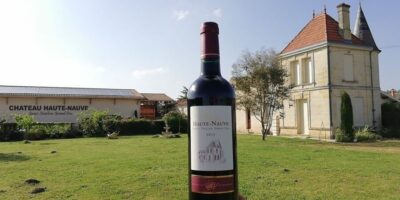 ★ 5.0Saint-Émilion: Vineyard Walking Tour and TastingFrom $29404 reviews
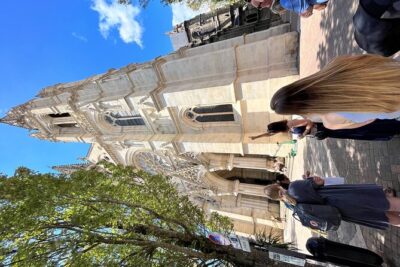 ★ 5.0Private – Best of Bordeaux Walking Tour + Glass of Bordeaux WineFrom $102240 reviews
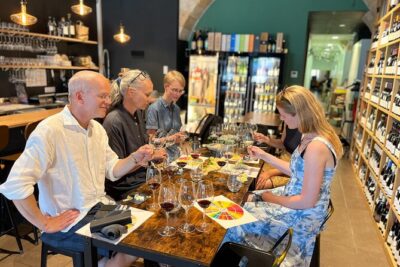 ★ 5.0Professional – Bordeaux Wine and Cheese Tasting with a walking tourFrom $78218 reviews
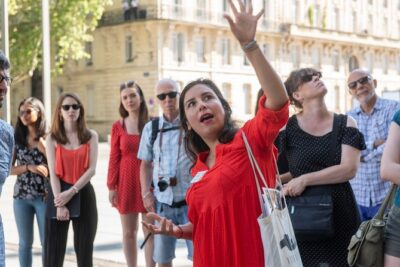 ★ 4.02-Hour Walking Tour of the City’s Iconic Sights and HistoryFrom $17207 reviews
 ★ 4.8Mystery and Myths Walking TourFrom $20187 reviews
 ★ 5.0Bordeaux City – Private Guided Walking Tour with Local SophiaFrom $104164 reviews
 ★ 4.9Exclusive! Bordeaux: Nighttime Highlights Walking TourFrom $6485 reviews
Browse the lists this tour appears in