
Reviewed · BORDEAUX VINEYARD & CHâTEAU TOURS
Château Balestard La Tonnelle : The “Origins” tour
One hour. Big wine education. At Château Balestard La Tonnelle, I loved the mix of a 2019 bioclimatic cellar with genuine 15th-century remnants, and the 400-square-meter panoramic terrace where you finish with a tasting. The catch is simple: this tour has no food, so plan to eat afterward.
I also like how the estate connects the dots fast: vineyard walk, then the winemaking spaces you usually only see in photos—vat room and barrel cellar—before you drink what you learned about. It’s a family estate with roots in Saint-Emilion going back to 1647, set on a limestone plateau that defines the region’s character.
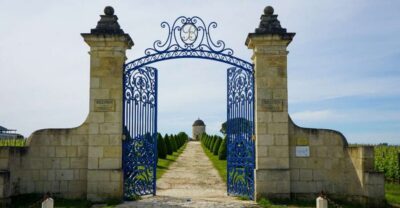
Logistics are easy, but you do need to be on time. You park near the watchtower, then walk to the shop along the path, and you’ll want to arrive about 5 minutes early—later than 20 minutes can mean the visit doesn’t happen.
In This Review
- Key things that make the Origins tour worth your time
- Origins tour at Château Balestard La Tonnelle: the 1-hour “wine education” that doesn’t drag
- Watchtower views and a modern cellar: why the architecture matters before your first sip
- The guided loop: vineyard walk, vat room, and barrel cellar
- Vineyard time: the starting point you can actually see
- Vat room: where fermentation and shaping happen
- Barrel cellar: aging that builds the final personality
- The limestone plateau and Saint-Émilion roots: a quick way to understand terroir without getting lost
- Tasting on the 360° panoramic terrace: 3 reds and one Grand Cru Classé
- What you should look for during the tasting
- Price and value: is $23 fair for a guided tour and 3 wines?
- Group size, guide languages, and how the tour feels in real life
- Who this Origins tour suits best (and who should skip it)
- Practical tips: how to make your hour go smoothly
- Should you book the Château Balestard La Tonnelle Origins tour?
- FAQ
- How long is the Origins tour?
- What does the tour cost?
- What’s included in the price?
- Are food or non-alcoholic drinks included?
- How many wines will I taste?
- Where should I meet for the tour?
- What time should I arrive before the tour?
- Is the tour wheelchair accessible?
- What languages are offered by the guide?
- How big is the group?
Key things that make the Origins tour worth your time
- A 15th-century watchtower + a 2019 bioclimatic cellar in the same visit
- Vineyard → vat room → barrel cellar in one tight, guided loop
- Three red wines, including a Grand Cru Classé
- A 360° feel from a 400 m² terrace over Saint-Émilion
- Small group (max 8), so questions don’t get lost
- Free parking on site and a straightforward start from the watchtower area
More Bordeaux cellar doors left open
- Saint-Émilion: Bordeaux Vineyard Tour and Wine Tasting★ 4.8 · 578 reviews
- Saint-Émilion: Vineyard Walking Tour and Tasting★ 5.0 · 404 reviews
- Saint-Émilion: Family Vineyard Visit with Wine Tasting★ 5.0 · 212 reviews
- Visit and Tasting Château Saint-Georges Cote Pavie, Grand Cru Classé★ 5.0 · 135 reviews
Origins tour at Château Balestard La Tonnelle: the 1-hour “wine education” that doesn’t drag
This is the kind of tasting tour I like on a wine day: short, structured, and still satisfying. You get a guided look at how wine moves from vineyard roots to the barrel cellar and tank/vat spaces, then you wrap it up with a tasting of three red wines. For $23, that’s not just “a glass and a goodbye.” It’s a full mini-course with a view.
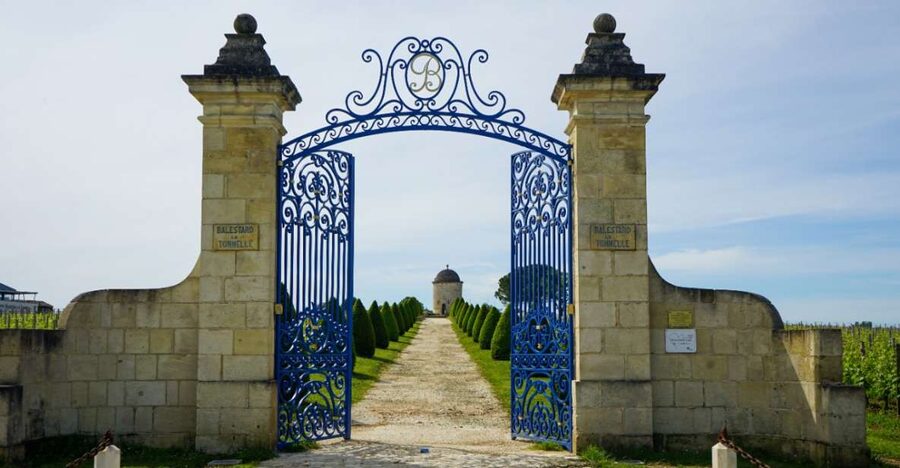
You’ll also appreciate the estate’s physical story. The origins of the property go way back—winemaking in the Saint-Emilion area since 1647—yet the tour highlights a modern architect-designed bioclimatic cellar from 2019. That contrast gives the whole visit extra meaning: you see how tradition and new technology coexist in the same workflow.
If you’re the type who likes pictures, you’ll have plenty. If you’re the type who likes details, you’ll get those too, especially in how the guide explains each production step.
Watchtower views and a modern cellar: why the architecture matters before your first sip
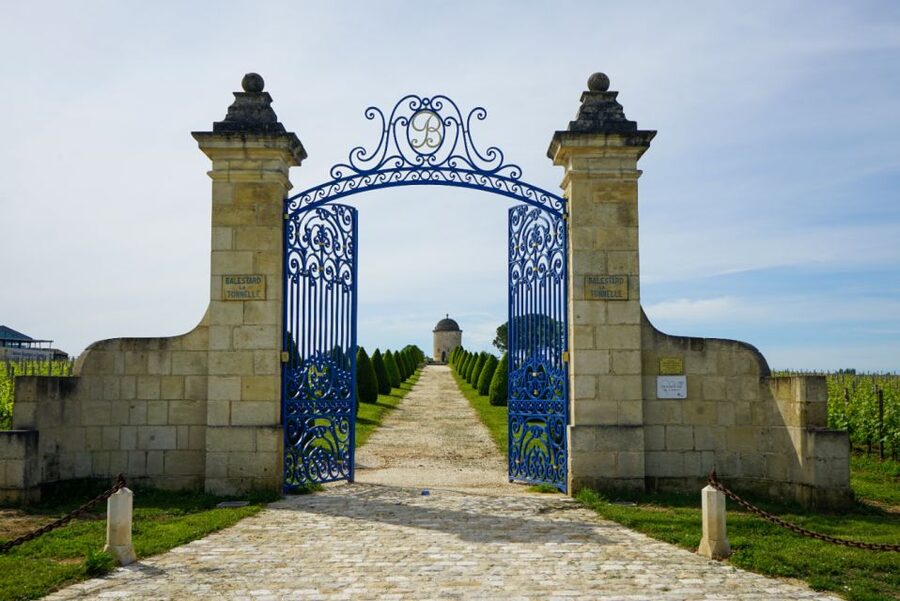
You’re not just touring a winery building here. You’re walking through time. The estate includes a 15th-century watchtower, and the visit frames it alongside a bioclimatic cellar built in 2019.
That matters because it changes what you notice. When you later taste wine, you can connect the practical choices to the setting—how the estate thinks about aging spaces, temperature control, and sustainability goals. Even if you’re not a technical wine person, the tour gives you something most tastings skip: context you can carry into your glass.
There’s also a geographic anchor. The property is on the limestone plateau of Saint-Emilion. You’re likely to hear that geography isn’t just trivia; it’s part of what makes the region recognizable. In other words, you’re tasting a product shaped by place, not just a brand-shaped bottle.
The guided loop: vineyard walk, vat room, and barrel cellar
The flow of the tour is the real value. In one hour, you cover the main winemaking phases that explain how reds become what you taste.
Vineyard time: the starting point you can actually see
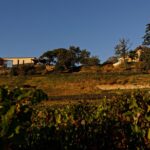
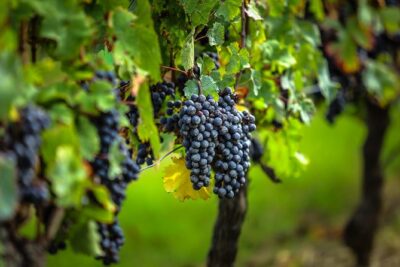
The tour begins with a vineyard walk. It’s the easiest place to understand the logic: this is where grapes start, and the rest of the process follows from that fruit. You’ll get a sense of how the estate thinks about the vines as the foundation for everything that comes after.
Even though this is a quick visit, vineyard introductions are often where the guide can set you up for the tasting. You’ll know what you’re looking at when you enter the production areas.
Vat room: where fermentation and shaping happen
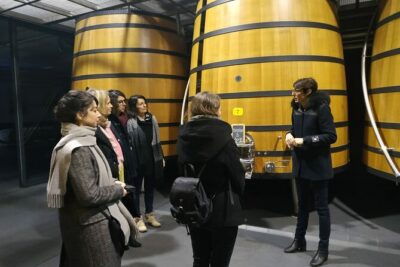
Next comes the vat room. This is where wine takes on structure. You’ll typically see and hear about how the juice is managed during fermentation and how the winemaking team aims to preserve the grape character while building the wine’s backbone.
This stop is especially helpful if you tend to think of wine as one-step magic. The tour makes it clear that there are choices at each stage, and those choices show up later in flavor and texture.
Barrel cellar: aging that builds the final personality
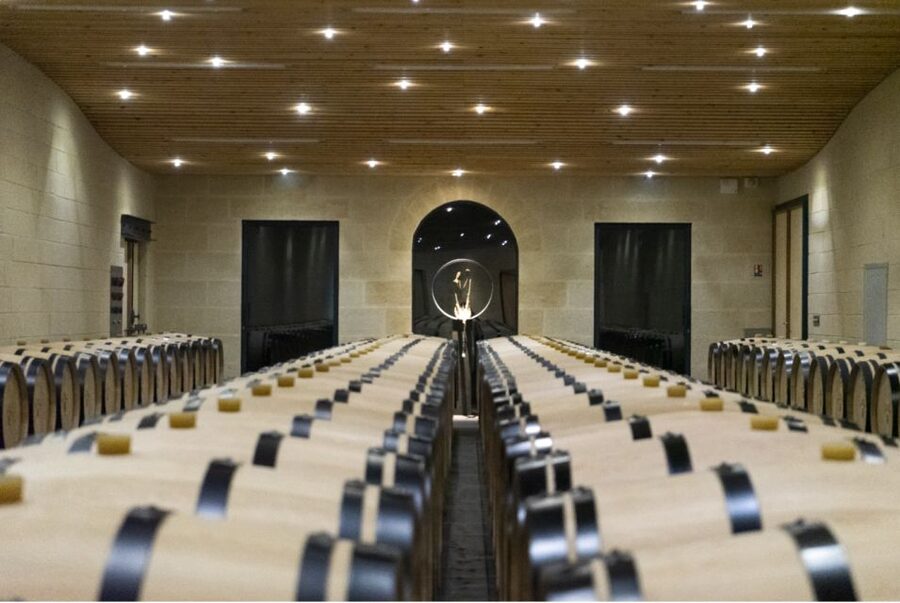
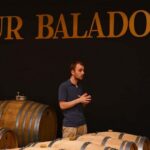
Finally, you visit the barrel cellar. This is the part where wine quiets down and develops. Even in a short tour, the barrel cellar changes the tempo: you slow your brain down, because aging is about time and handling.
When you taste at the end, you’ll likely notice how the cellar work influences the wine’s finish. That’s the tour’s smartest trick: you learn first, taste second.
The limestone plateau and Saint-Émilion roots: a quick way to understand terroir without getting lost
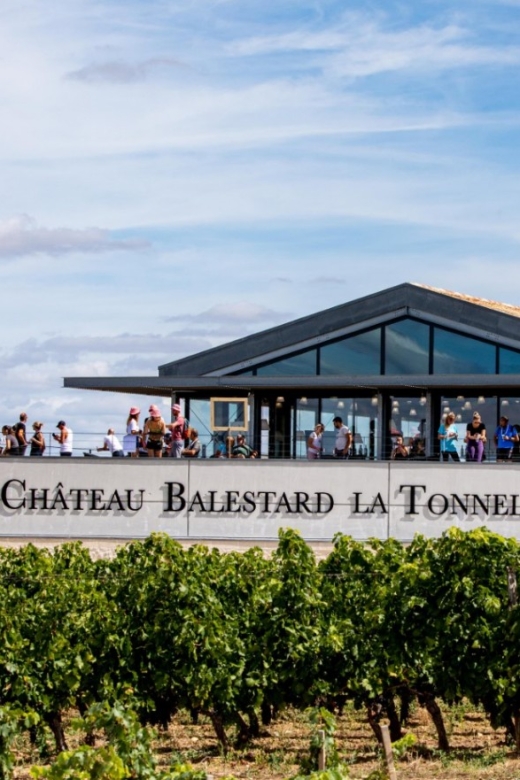
You don’t need a geology degree for this tour, but it helps that the estate sits on the limestone plateau of Saint-Emilion. Limestone is mentioned because it’s part of how the region’s identity forms. The guide’s job is to keep it practical—linking the ground you’re standing on to the wines you’ll drink.
I like tours that don’t turn terroir into a lecture. Here, you get enough context to make sense of what you taste at the terrace without drowning in technical jargon. It’s more like getting your bearings fast than building a whole textbook in an hour.
Tasting on the 360° panoramic terrace: 3 reds and one Grand Cru Classé
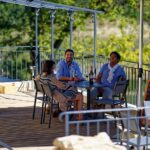
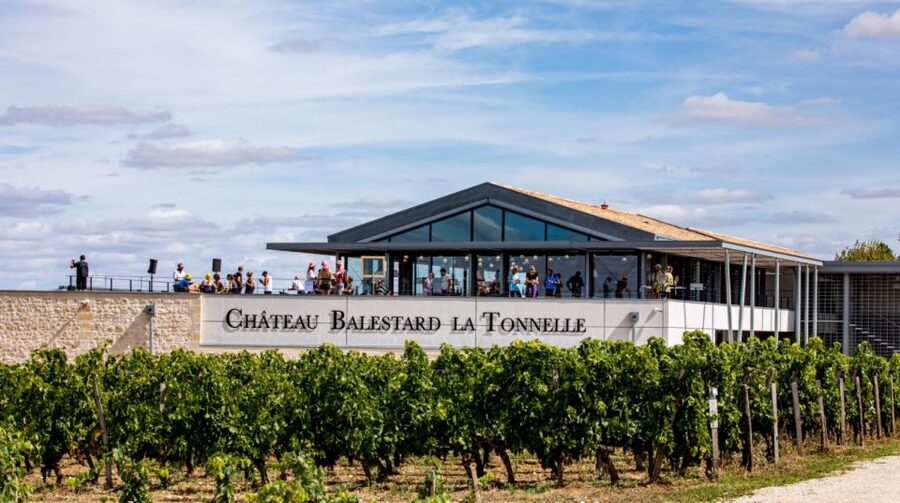
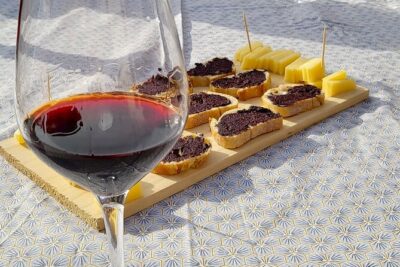
The finale is the 360° panoramic terrace—a big 400-square-meter viewing platform with a view over Saint-Emilion and surrounding appellations. This is where the tour turns from instruction into enjoyment.
You’ll taste three red wines, including one Grand Cru Classé. That single detail is why I’d put this on your shortlist if you’re curious about how top-level Saint-Emilion styles can differ from one another.
Also, the terrace setting changes how the tasting feels. You’re not stuck in a narrow room with walls pressing in. You’re tasting while looking out over the village and the wider region, which helps you remember that this isn’t just “wine for wine’s sake.” It’s a local craft tied to a specific place and community.
What you should look for during the tasting
You won’t need to be fancy. Just do three simple things:
- Smell once, then pause and talk about what you notice.
- Sip slowly enough that you can identify texture (not just flavor).
- Ask the guide what changed from wine to wine in plain terms.
The best moment is when the guide connects what you’re tasting to what you saw earlier—vat room choices, barrel aging, and how the estate’s approach shapes the final wine.
Price and value: is $23 fair for a guided tour and 3 wines?
For $23 per person, this tour is priced like a “smart add-on” rather than a pricey, all-day experience. You’re paying for guided time plus three wine tastings, and you’re doing it in a small group setting (limited to 8 participants).
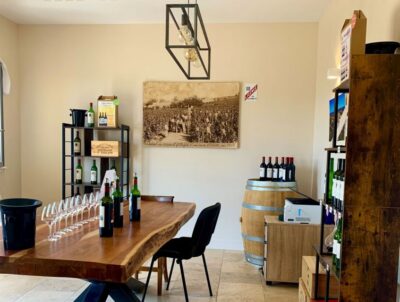
What makes it good value is that it’s not just sampling. You’re paying for structure: vineyard walk, production rooms, then tasting. If you’re touring Saint-Emilion and you don’t want to lose half your day to one winery stop, this length hits the sweet spot.
One more practical note: since the tour does not include food, you’ll want to budget for a meal before or after. If you’re the kind of traveler who likes to be fed too, plan your schedule so the tasting doesn’t become the thing that replaces lunch.
Group size, guide languages, and how the tour feels in real life
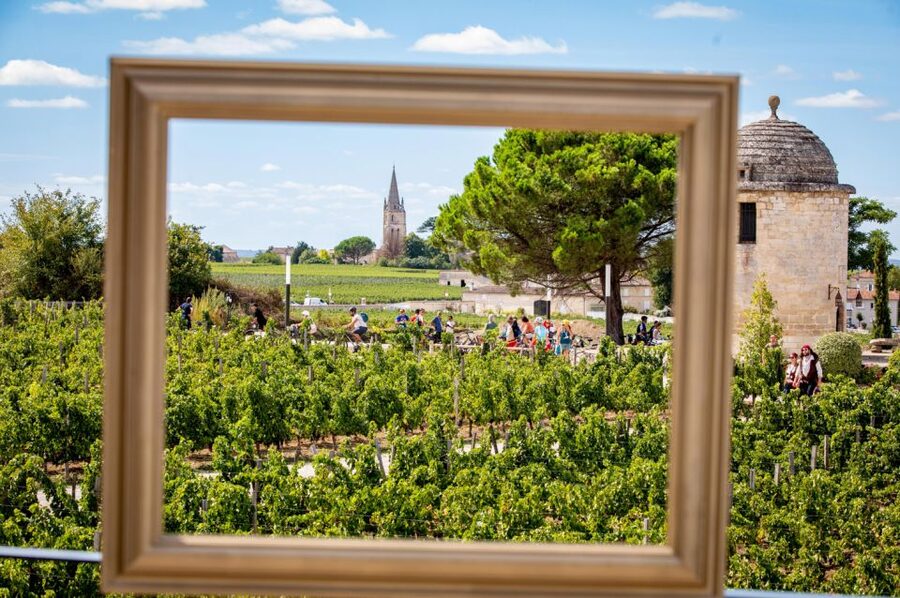
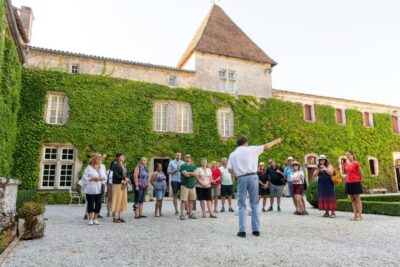
This is a small group tour capped at 8 participants, and that’s a big deal. In my experience, small groups usually mean the guide can answer questions without rushing. You also get a more personal vibe while walking through the cellar spaces.
Language is solid too: the tour offers French and English with a live guide. In at least one recent experience, the guide Audre was noted as very kind and able to speak Spanish as well, which tells me the team cares about making the message land. (Even if you don’t speak Spanish, it’s a good sign for clarity and warmth.)
The overall feel is also described as orderly and clean, which matters in cellar and production spaces where you want to focus on the explanation, not on the environment.
Who this Origins tour suits best (and who should skip it)
This tour fits well if you:
- Want a 1-hour winery visit that teaches as well as entertains
- Like Saint-Emilion views but don’t want to spend the entire day in one place
- Prefer guided tastings with context rather than a quick pour-and-vanish
- Travel in a smaller group and appreciate having your questions answered
I’d hesitate if you:
- Want a longer, food-based wine experience with a full meal included (this tour is tasting-focused)
- Expect a “wander at your own pace” visit—this one moves with the guide and the schedule
Practical tips: how to make your hour go smoothly
Here’s how to make the visit painless:
- Start by parking near the watchtower area.
- From there, follow the path to the shop to meet the group.
- Arrive about 5 minutes early. If you’re more than 20 minutes late, the visit may be canceled.
Also, since there’s no food or additional drinks included, consider bringing water for the walk and planning your meal timing. The tasting will be great, but it’s not a replacement for lunch.
Should you book the Château Balestard La Tonnelle Origins tour?
If you want a well-paced Saint-Emilion winery visit that balances history, modern winemaking, and a real terrace tasting, I’d book it. The combination of a family estate dating back to 1647, a 15th-century watchtower, and a 2019 bioclimatic cellar gives the tour a storyline beyond the usual tasting room routine.
Book it especially if you’re short on time and you still want to understand what you’re drinking. Skip it if you need food included or you prefer a longer, slower winery day. Otherwise, this is a strong, straightforward choice.
FAQ
How long is the Origins tour?
The tour lasts 1 hour.
What does the tour cost?
It costs $23 per person.
What’s included in the price?
You get a 1-hour guided tour with a tasting of 3 wines, tasting on the panoramic terrace, time to shop at the property, and free parking.
Are food or non-alcoholic drinks included?
No. The tour does not include food or drinks beyond the wine tasting.
How many wines will I taste?
You’ll taste 3 red wines, including a Grand Cru Classé.
Where should I meet for the tour?
Park near the watchtower, then walk to the shop following the path.
What time should I arrive before the tour?
Plan to get to the boutique about 5 minutes before the tour starts. Delays over 20 minutes may result in cancellation of the visit.
Is the tour wheelchair accessible?
Yes, the tour is wheelchair accessible.
What languages are offered by the guide?
The live tour guide offers French and English.
How big is the group?
The tour is limited to small groups of up to 8 participants.
More Tours in Saint Emilion


More Tour Reviews in Saint Emilion
More Bordeaux Cellar Doors
Just Added: Fresh Bordeaux Reviews
Bordeaux Vineyard & Château Tours, compared.
 ★ 5.0Medoc or Saint Emilion Wine Tasting and Chateau from BordeauxFrom $1141,415 reviews
 ★ 4.5Saint Emilion Half-Day Trip with Wine Tasting & Winery Visit from BordeauxFrom $1331,034 reviews
 ★ 5.0Saint-Emilion Afternoon Wine Tour – 2 Wineries & delicaciesFrom $119614 reviews
 ★ 4.8Saint-Émilion: Bordeaux Vineyard Tour and Wine TastingFrom $21578 reviews
 ★ 4.2Vineyards Wine Tasting Half-Day TripFrom $68470 reviews
 ★ 5.0St-Emilion & Médoc Wine Day Tour: Chateaus, Tastings and LunchFrom $235430 reviews
 ★ 5.0Saint-Émilion: Vineyard Walking Tour and TastingFrom $29404 reviews
 ★ 4.5Medoc Region Wine Day Trip with Vineyard Visits & Tastings from BordeauxFrom $266293 reviews
Browse the lists this tour appears in