
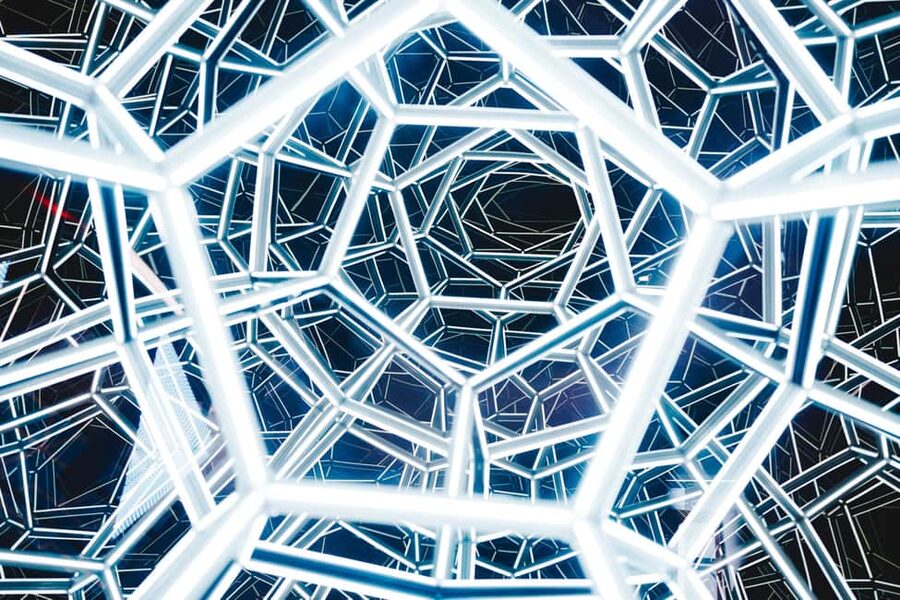
Reviewed · CITé DU VIN & WINE MUSEUMS
Bordeaux: Museum of Illusions Entry Ticket
A one-hour ticket can really mess with your eyes. The Bordeaux Museum of Illusions turns perception into a walk-through photo studio, with rooms designed to make you look like you’re floating, flipping, or changing size. I love how quickly you get into the action once you reach Musée de l’Illusion Bordeaux, and you can move at your own pace without feeling rushed.
I also like the mix of pure visual fun and the practical “why it happens” part, with installations that show the science behind what you’re seeing. One thing to consider: the price can feel a bit steep for a 1-hour visit, and you may want to plan for short waits in the most popular setup, like the mirror area.
In This Review
- Quick hits before you go
- First stop: Musée de l’Illusion Bordeaux and how the experience feels
- Ticket value: is $22 for one hour worth it?
- What happens inside: a practical walkthrough of the illusion rooms
- Floating and mid-air poses
- Upside-down and size-change illusions
- Holograms and perspective puzzles
- The mirror room: the popular pause (and potential wait)
- Photography strategy: how to get the Instagram-worthy shots (without stressing)
- Who this is best for (and who might not love it)
- Plan your Bordeaux day around this museum
- A few practical tips that make the visit smoother
- Should you book the Bordeaux Museum of Illusions ticket?
- FAQ
- How long does the Bordeaux Museum of Illusions ticket last?
- What is included in the ticket?
- Where do I go for the experience?
- Is the museum wheelchair accessible?
- Are food and drinks allowed inside?
- What should I bring to get the most out of it?
Quick hits before you go
- Self-paced rooms: You control the order and your photo breaks.
- Photo-friendly illusions: Look floating mid-air, upside down, or smaller/larger.
- Mind-bending visual tricks: Expect holograms, perspective puzzles, and other optical effects.
- Short visit that packs a lot: Plan for about an hour so you don’t feel rushed.
- Good for families: Kids often go in unsure and come out laughing and fascinated.
- Consider crowds: Some rooms can attract lines, especially the mirror-based attraction.
Bordeaux wine under one roof, more to see
- Bordeaux Wine and Trade Museum Admission Ticket with Wine Tasting★ 4.5 · 599 reviews
- Bordeaux: Museum of Illusions Entry Ticket★ 4.2 · 588 reviews
- Bordeaux: Wine and Trade Museum Entry Ticket & Wine Tasting★ 4.4 · 121 reviews
- Bordeaux: Wine History Tour with Tasting★ 4.8 · 13 reviews
First stop: Musée de l’Illusion Bordeaux and how the experience feels
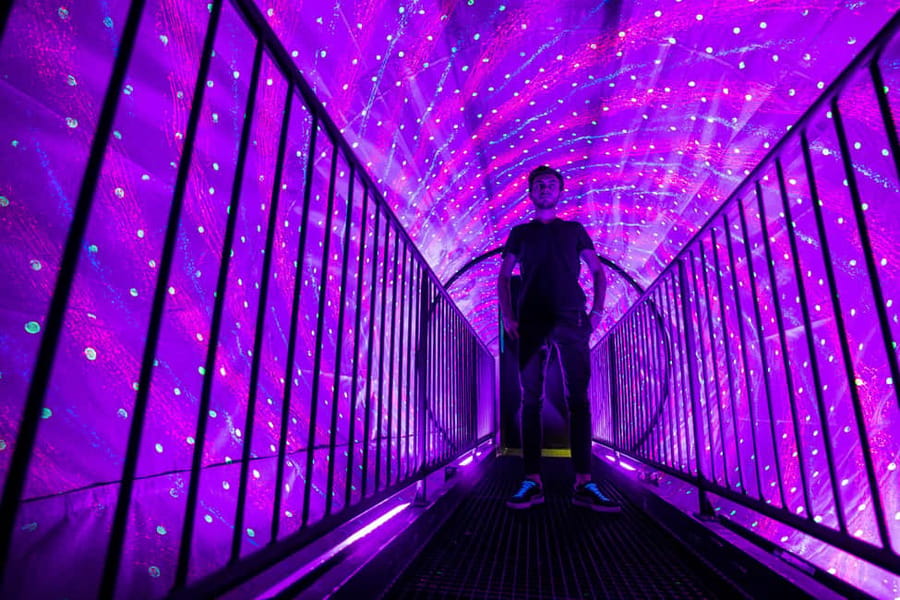
The Musée de l’Illusion in Bordeaux is exactly what it sounds like: an optical-illusion museum where your eyes are the main characters. You start with entry and then it’s your ticket into a sequence of rooms built around visual tricks—some playful, some surprisingly technical in how they explain perception. The good part is that it doesn’t require any prep. You don’t need a museum background. You just follow the flow, look around, and start trying the poses.
What makes this place enjoyable is how fast the museum commits to “hands-on” rather than “read-and-stare.” Most installations are designed so you can immediately interact—walking into a frame, stepping onto a marked spot, or shifting your angle to make the effect change. That’s why it’s so easy to lose track of time. In one trip, you’ll do the big moments and still feel like you had time to repeat the ones you loved.
You’ll also get the science element in a friendly way. Several rooms are built to show that illusions aren’t random—they’re predictable. They happen because your brain fills in missing information and tries to make sense of what your eyes report. That’s the behind-the-scenes idea that makes the experience feel more than just a joke for photos.
Two practical points for your visit. First, bring a charged smartphone and use it like a tool, not just a camera—you’ll want a lot of angles. Second, plan for about one hour of time on-site. This isn’t a “half-day museum” experience, so if you try to stretch it without a plan, you might feel like you’re paying for time you’re not using.
Ticket value: is $22 for one hour worth it?
At around $22 per person for a roughly 1-hour visit, the price isn’t “budget museum” territory. But it can still feel worthwhile if you judge value by what you actually do there: spend time inside photo-ready illusions, interact with the installations, and leave with a better understanding of how perception works.
Here’s how I think about value for this kind of attraction:
- You’re paying for access to experiences, not a collection. The museum is about activities—rooms that produce effects on demand.
- Time matches the format. Optical-illusion rooms are attention-heavy. If you go too long, you might start to see the tricks instead of enjoying them. The one-hour duration usually fits the design.
- Photos are part of the product. Many people come specifically to capture floating, upside-down, and size-changing moments. If that’s your goal, the ticket tends to pay off quickly.
Still, there’s a fair caution: a couple of visitors felt the price was high for the time you’re in. That makes sense if you expect a longer museum walk. If you want a slow, traditional art or history visit, you’ll probably feel underwhelmed.
My advice: treat it as a fun “stop” in your Bordeaux day, not the centerpiece unless you love optical illusions and photo moments. If you’re traveling with kids who like interactive attractions, the ticket often plays better because the rooms are designed for quick wins and lots of laughs.
What happens inside: a practical walkthrough of the illusion rooms
The museum experience works like a set of mini challenges. You enter, look for the installation instructions, try the pose or viewpoint, and then move on. There’s no single rigid route you must follow, and that freedom is helpful because your group might have different preferences—some people want the biggest visual shocks, others want the “how is that possible?” explanation rooms.





Floating and mid-air poses
Some of the standout moments are built around making you look like you’re floating. You’ll step into spaces where your position and the room’s design trick the eye into reading your body as weightless. This is where a smartphone helps a lot: take a few test photos from slightly different angles so you get the effect right on the first try.
Tip: if you’re going in a group, don’t wait for everyone to be ready before you start. Do one or two quick rounds, then coordinate for the perfect photo.
Upside-down and size-change illusions
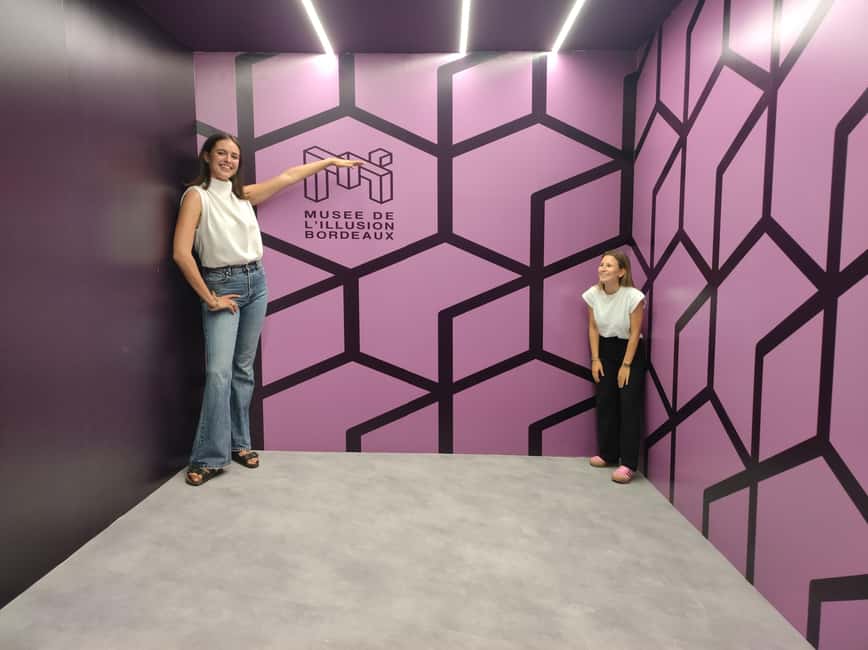
Another type of room focuses on body orientation and scale. You’ll see effects where you look upside down, or your size appears to change. These are especially fun because your reaction matters. The illusions often work best when you hold a believable pose and keep your frame consistent from photo to photo.
These rooms are also good for mixed ages. Adults tend to enjoy the puzzle aspect. Kids tend to enjoy the surprise and the silly result. You get both in the same setup.
Holograms and perspective puzzles
The museum also uses more “technical-feeling” tricks like holograms and perspective-changing puzzles. These can be a nice break from the photo poses because they encourage you to think for a moment before you act. When the museum explains the science side, it usually clicks here—your brain is trying to interpret depth, motion, or spatial cues, and the installation plays with those cues on purpose.
If you enjoy visual problem-solving, this is likely where you’ll get the most satisfaction. If you just want fun pictures, you can still enjoy these rooms without overthinking them.
The mirror room: the popular pause (and potential wait)
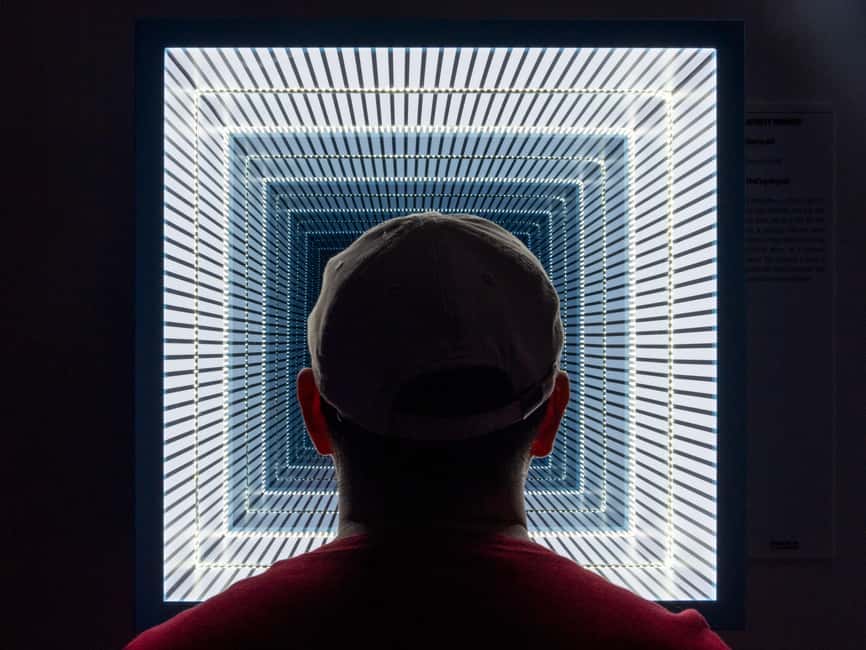
One area people single out is the mirror attraction. It’s the kind of setup that can attract a queue because the mirror effects are great for both playful photos and that shocked reaction moment. One practical drawback to note: some visitors expected it to be larger than they imagined and also mentioned waiting.
If your goal is to move efficiently, treat the mirror-based part like a “do it early” moment. The first time you enter, check whether the mirror area is crowded. If it is, you can continue a bit through other rooms and come back later.
Photography strategy: how to get the Instagram-worthy shots (without stressing)
Yes, this museum is built for photos. But the easiest way to ruin your experience is to treat it like a production. Instead, make photos a natural part of your flow.
Here’s a simple strategy that works in illusion rooms:
- Start with the easy poses first. Floating, upside-down, and shrinking/larger effects are usually quick to figure out.
- Take two to three photos per setup. Slight angle shifts matter. You’ll often get one or two “perfect” frames without needing ten takes.
- Switch roles if you’re with someone. One person takes photos while the other tries poses. It keeps the visit moving and keeps energy up.
- Look for the room’s framing. The illusion often depends on position and where the camera sits.
Also, bring a charged phone and keep it handy. You’ll want to check lighting and make quick adjustments as you move from room to room. The museum’s whole design is built around visual effect, so even small changes—like stepping one pace to the left—can change how convincing the illusion looks.
And yes, laughter is part of it. Several people highlight that the experience isn’t just about visuals—it’s about having fun while you’re figuring out what your brain is doing wrong (or right, depending on how you look at it).
Who this is best for (and who might not love it)
This museum is an excellent fit for:
- Families with kids who like interactive attractions. Kids often go in skeptical and leave delighted, especially when the rooms create clear, silly visual results.
- Adults who enjoy visual puzzles or science explanations without heavy reading.
- Couples and friends who want an activity that creates shared moments and lots of photos.
It may be less satisfying if you:
- Prefer long, traditional museum exhibits and detailed galleries.
- Want food, drinks, or a full meal experience built into the ticket. The experience doesn’t include that, so plan to eat elsewhere.
- Are sensitive to crowds in popular setups like the mirror area and you’re visiting during a busy time.
A good way to decide: if you’re the kind of person who enjoys playing with camera angles at home—trying to make things look like they’re bending, tilting, or changing scale—this place will feel fun right away.
Plan your Bordeaux day around this museum
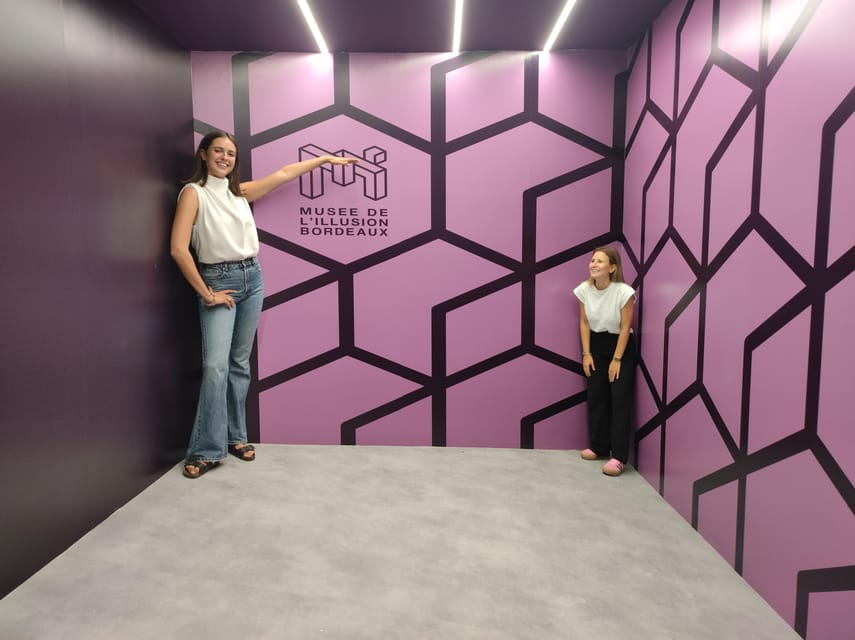
Because the visit is about one hour, it’s best as a focused stop. You can easily pair it with another neighborhood walk or a coffee break nearby. The museum doesn’t include food or drinks, and you’re not meant to bring alcohol or food into the experience, so have a plan for snacks before or after.
A simple flow I’d recommend: arrive with a little time buffer, take your photos without rushing, then finish while energy is still high. If you wait too long between rooms, you may start to notice the trick mechanics instead of enjoying the effect.
Also, expect the “wow” moments to come in waves. The first rooms may hit fast because you’re still in discovery mode. Midway through, you might get more selective—sticking to the most convincing installations and the ones that produce your favorite photos. That’s normal and it’s why moving at your own pace is a benefit.
A few practical tips that make the visit smoother
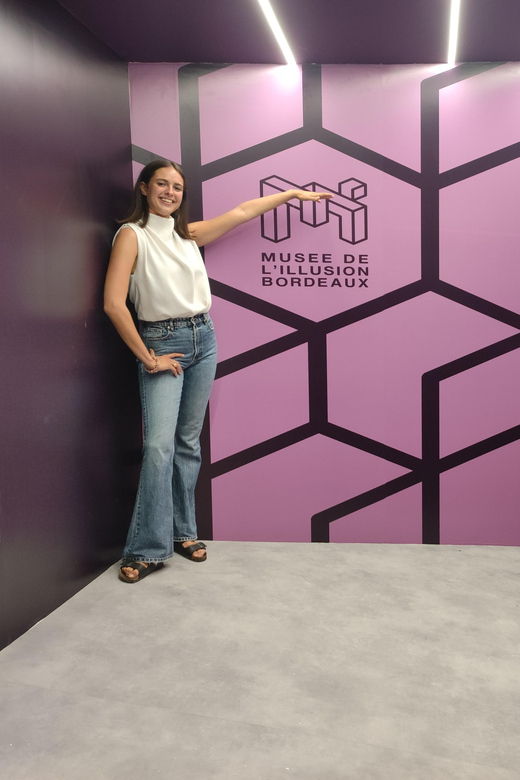
These are small things, but they change how painless the visit feels:
- Bring your camera habitually. The museum is designed for photos. A charged smartphone makes the biggest difference.
- Wear shoes you can stand in. Some rooms require you to hold a pose or move carefully into position.
- Expect some waits for the mirror attraction. If it’s busy, you’ll have an easier time by continuing with other rooms first.
- Keep snacks for outside the museum. Food and drinks are not allowed inside.
- Make your time count. With a one-hour duration, you’ll enjoy it more if you don’t treat it like a casual stroll without a plan.
And if you’re coming with kids: set expectations lightly. Tell them to be ready to pose, and that the rules change depending on where you stand. Once they understand that, they usually jump in quickly.
Should you book the Bordeaux Museum of Illusions ticket?
I’d book it if you want a playful, interactive Bordeaux stop that mixes optical illusion photos with an easy science angle. The one-hour format is a plus because it’s focused, and the rooms are clearly designed to create that instant reaction—floating, upside-down, size tricks, holograms, and perspective puzzles.
I’d skip it or at least rethink timing if you’re chasing a long-form museum experience or if price sensitivity is a big deal for you. The museum can feel pricey for the short visit, and the mirror area may have queues that disrupt a smooth flow.
Best fit: families, photo lovers, and anyone who enjoys how the brain interprets what the eyes see. If that’s your vibe, this ticket is a fun use of time in Bordeaux.
FAQ
How long does the Bordeaux Museum of Illusions ticket last?
The visit duration is listed as about 1 hour. Plan your time around that so you can take photos and try the main illusion rooms without feeling rushed.
What is included in the ticket?
Your entry ticket to Musée de l’Illusion Bordeaux is included. That gives you access to the museum’s illusion rooms and activities during your visit.
Where do I go for the experience?
You should go to Musée de l’illusion Bordeaux. That is the meeting point listed for this activity.
Is the museum wheelchair accessible?
Yes, the activity is wheelchair accessible, so you can plan to visit with mobility needs in mind.
Are food and drinks allowed inside?
No. Food and drinks are listed as not allowed during the visit. Alcohol and drugs are also not allowed.
What should I bring to get the most out of it?
Bring a camera and a charged smartphone. Since the experience is built for visual illusions and photo moments, you’ll want your phone ready throughout your visit.
Bordeaux Passes Worth Holding
More Tour Reviews in Bordeaux

Bordeaux Wine Under One Roof

Just Added: Fresh Bordeaux Reviews




Cité du Vin & Wine Museums, compared.
 ★ 4.6Cité du Vin Entry Ticket and Wine TastingFrom $273,885 reviews
 ★ 4.5Bordeaux Wine and Trade Museum Admission Ticket with Wine TastingFrom $14599 reviews
 ★ 4.4Wine and Trade Museum Entry Ticket & Wine TastingFrom $14121 reviews
 ★ 4.8Wine History Tour with TastingFrom $7613 reviews
Browse the lists this tour appears in