
Reviewed · BORDEAUX HISTORY & LANDMARKS TOURS
Private Bordeaux History Tour with a glass of Bordeaux wine.
Bordeaux history makes more sense when someone walks you through it. This private, English-speaking history walk links famous sights in a tight loop, then ends with a glass of Bordeaux wine. I love the personal pace and how the guide connects monuments to real people and events.
I also love that you’re seeing big-name Bordeaux landmarks in one go, without losing time to ticket lines for every stop. Guides such as Victor and Emma get praised for tailoring details to what you care about, and that focus keeps the whole walk feeling human. One consideration: entrances inside monuments aren’t included, so you’ll often get the best views from outside and from where you can stand nearby.
In This Review
- Key Highlights You’ll Actually Feel on the Ground
- Getting Your Bearings at Cathédrale Saint-André
- Saint-André Cathedral: Gothic Power and Eleanor of Aquitaine
- Tour Pey-Berland and Rue Saint-Catherine: From Roman Road to Today
- Rue du Loup: Medieval Bordeaux and the English Thread
- Place du Palais and Porte Cailhau: When Bordeaux Celebrated Victory
- Place de la Bourse, Miroir d’Eau, and the Theatre District
- Place Gambetta, Passage Sarget, and Church of Notre-Dame
- Allées de Tourny and the Monument aux Girondins Finish Strong
- The Wine Stop After the Walking: Simple, Local, and Well-Timed
- Is $90.36 Worth It for a Private 2-Hour Bordeaux Walk?
- Who This Tour Fits Best
- Should You Book This Bordeaux History Tour?
- FAQ
- How long is the private Bordeaux history tour?
- Is this a private tour or shared group?
- What language is the guide in?
- Is a glass of wine included?
- Are entrance tickets to monuments included?
- Where does the tour start and end?
- What’s the cancellation policy if plans change?
Key Highlights You’ll Actually Feel on the Ground

- Private group, not a cattle-car walk: your questions and interests steer the pace.
- UNESCO-worthy stops in close proximity: you can tick off major sights without long transfers.
- Rue Saint-Catherine plus medieval clues: you get the “how Bordeaux became Bordeaux” story, not just photos.
- Porte Cailhau and Place de la Bourse area: two of the most cinematic spots in the center, built with big political meaning.
- Finish with a glass of Bordeaux wine: a relaxed landing after the walking.
- English commentary with named guide examples: Victor and Emma are mentioned in guide feedback for strong, clear explanations.
Deeper into the old port, more history walks
- Bordeaux: Historic Center & Chartrons District Bike Tour★ 4.8 · 709 reviews
- Bordeaux: Top Landmarks & Historic Bike Tour★ 4.9 · 346 reviews
- 2-Hour Walking Tour of the City’s Iconic Sights and History★ 4.0 · 207 reviews
- Bordeaux’ Best Boulangeries & History Tour★ 5.0 · 126 reviews
Getting Your Bearings at Cathédrale Saint-André
You start at Cathédrale Saint-André de Bordeaux (Pl. Pey Berland). That’s a smart opener because it’s an anchor point: from here, you can feel how Bordeaux grew outward and how power and faith shaped the city center.
This tour runs about 2 hours, so the rhythm matters. You’ll be walking through compact, central streets where the guide points out what you’d likely miss on your own—like why certain streets bend the way they do, or how a gate like Porte Cailhau was more than decoration. The private format helps too. If you want fewer facts and more context (or the opposite), you can usually adjust.
Also worth knowing: the experience uses a mobile ticket, and it’s offered in English. It’s also near public transportation, which helps if you’re stitching this into a longer Bordeaux day.
Saint-André Cathedral: Gothic Power and Eleanor of Aquitaine
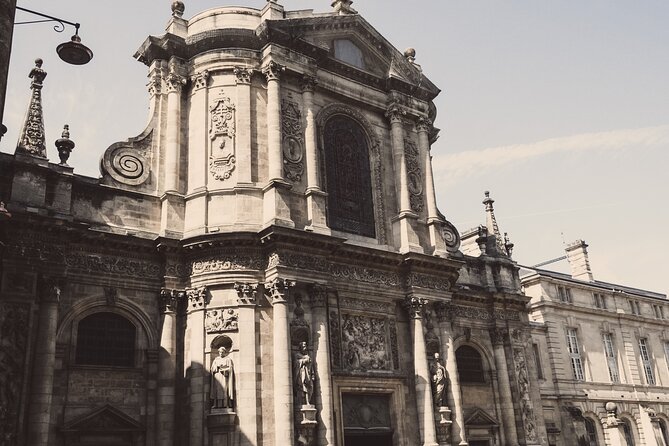
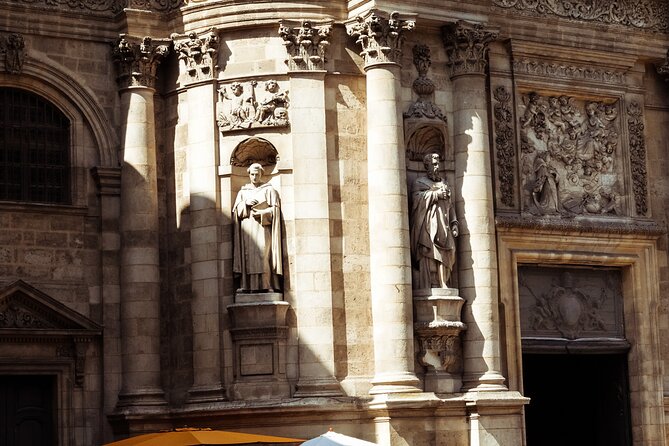
Your first real “wow” stop is Saint-André Cathedral. The emphasis here is Gothic architecture, and you’ll see why people treat it like a cornerstone of Bordeaux’s identity. The façade and carvings are the kind of details you can spend time on even if you’re not an architecture nerd.
What makes this stop more than a pretty building is the way the guide frames its human connections. Expect stories tied to royal moments, including the union of Eleanor of Aquitaine and King Louis VII. Even if you’re not a medieval-history specialist, those names make the cathedral feel less like a landmark and more like a witness to centuries of high-stakes life.
Time note: you’ll spend around 15 minutes here, and that’s about right for seeing the outside and absorbing the story without rushing.
Practical consideration: admission inside monuments is not included, so don’t plan this as a cathedral interior tour. If you strongly want interiors, build in a separate stop later (or check what you can access independently).
Tour Pey-Berland and Rue Saint-Catherine: From Roman Road to Today
After the cathedral area, you move down toward Tour Pey-Berland and into Rue Saint-Catherine, one of Bordeaux’s big pedestrian streets. It’s known as the longest pedestrian street in Europe, and walking it gives you that immediate “this is the spine of the city” feeling.
The guide’s job here is to connect layers of time:
- Roman-era origins as a road
- Later shifts in how the space was used
- The modern street life that fills the sidewalks today
This is also where a private tour helps you enjoy the street instead of just watching it. You’ll learn how the street’s history shaped what you see now—architecture, street layout, and why certain areas feel like they’re designed for crowds.
Time note: about 10–15 minutes across these adjacent stops gives you just enough time to take it in without turning it into a long walk with no payoff.
Your own guide, more private Bordeaux days


Rue du Loup: Medieval Bordeaux and the English Thread
Next you stop at Rue du Loup, with a focus on the Middle Ages and the story of how Bordeaux became tied to England. This is one of the more intriguing segments because it shifts from stone-and-street impressions to political history.
The Middle Ages in Bordeaux can feel abstract until someone connects the dots to geography and surviving architecture. In this stretch, you’re looking at medieval clues in the built environment and hearing how those moments changed the city’s direction. The guide commentary also tends to include the longer English association people often reference when talking about Bordeaux’s rule and influence over time.
Time note: roughly 10 minutes here means it’s focused. If you’re the type who likes a tight, story-driven stop, this is a good one.
Practical tip: wear shoes you’re comfortable walking in. This part is less about dramatic landmarks and more about reading the city with your guide.
Place du Palais and Porte Cailhau: When Bordeaux Celebrated Victory
You’ll then hit Place du Palais, where the talk shifts to design and intent. This stop is brief, but it sets you up for the next one, because Porte Cailhau is also about message—who was in charge, what they wanted to proclaim, and how the city guarded its identity.
Then comes Porte Cailhau, a major gateway from the 15th century. This is where the tour leans into architecture that carries power. You’ll learn it was built to honor King Charles VIII’s victory at Fornovo and that it once served as a main entrance to the city.
What I like about this stop is how it blends styles—Gothic and Renaissance elements—and turns a gate into a story about defense and prosperity. In other words, it’s not just “pretty stone with arches.” It’s a public statement from the time.
Time note: around 15 minutes. You’ll get time to look carefully while the guide explains what you’re actually seeing.
Place de la Bourse, Miroir d’Eau, and the Theatre District
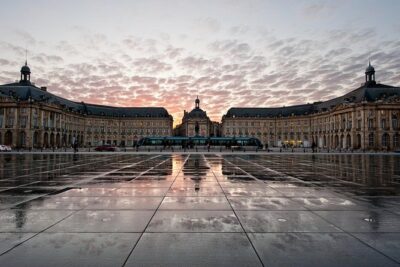
One of the best “Bordeaux postcard” moments is Place de la Bourse and the Miroir d’Eau. Even though your time here is short, this stop matters because it shows Bordeaux’s official, grand face—especially in contrast to the older, medieval pieces earlier in the walk.
You’ll also cover viewpoints and mentions tied to several nearby monuments:
- The route keeps linking back to major landmarks like Grand Théâtre de Bordeaux
- You’ll hear how the area fits into the city’s artistic and cultural life
- There are connections toward Basilica of Saint-Michel and Pont de Pierre, which you can often spot or understand within this central zone
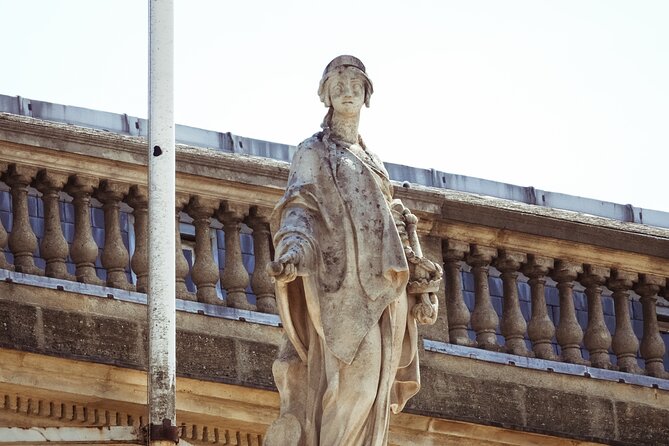
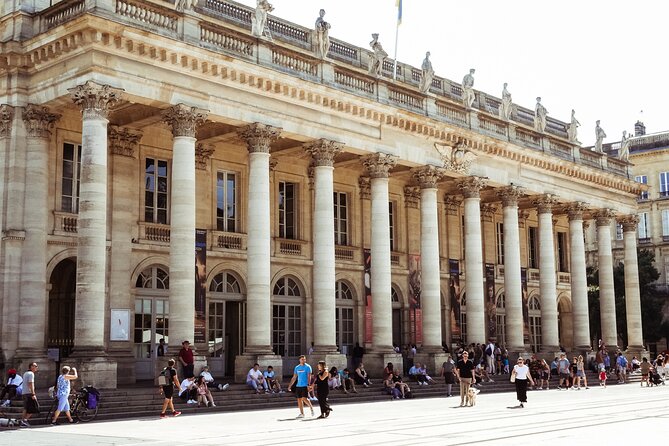
Then you’ll step into the spotlight for Grand Théâtre. This building is a true Bordeaux icon. It was built in 1780 and designed by architect Victor Louis. The exterior includes statues of the nine muses and goddesses, and the interior is described as opulent, including elements like the grand staircase and a glittering chandelier.
Even if you can’t go inside, the guide’s explanation helps you read the design as a cultural project, not just a building. It’s part of why Bordeaux still feels like a city with a formal, historical confidence.
Time note: Grand Théâtre is only about 5 minutes. That’s enough for the façade and the story, but not enough for a slow interior linger.
Place Gambetta, Passage Sarget, and Church of Notre-Dame
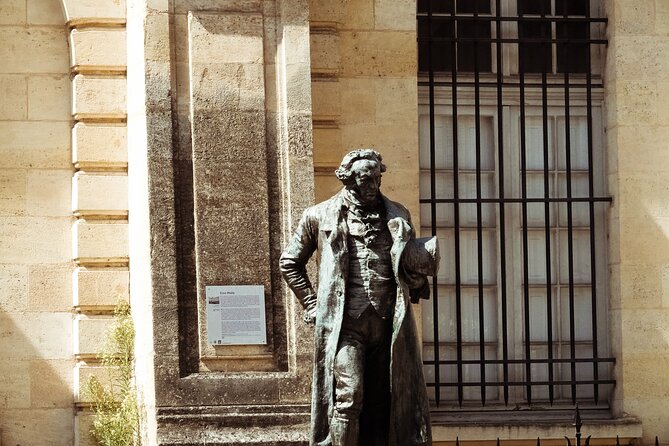
After the grand squares, the walk turns more “people and passages.”
At Place Gambetta, you learn it was once the city’s western gate, then later became part of an 18th-century urban transformation. The square’s gardens and surrounding elegant architecture make it feel like a pause button. It’s also tied to political change, including links to the French Revolution, which the guide threads into the story of how civic space evolved.
From there you head to Passage Sarget, a late 19th-century covered passage designed to connect key streets. You’ll hear about Jean-Alexandre Sarget, a philanthropist and banker it’s named after, and you’ll see the Paris-inspired arcade idea translated into Bordeaux style. Look for the glass roofing, ironwork, and stone details. The guide also explains how these passages were once places for luxury shopping and intellectual gatherings, which makes it feel less like a random corridor and more like a chapter in city life.
Next is Place du Chapelet and the Church of Notre-Dame. The church dates to the 17th century and is known for its organ, still used during special performances. You’ll also learn it was tied to a notable 19th-century painter’s funeral. That kind of detail turns a church stop into something more personal and human.
Time notes: each of these stops is brief (around 5–10 minutes). The upside is you stay moving. The downside is you won’t have long for deep photos or long lingering.
Allées de Tourny and the Monument aux Girondins Finish Strong
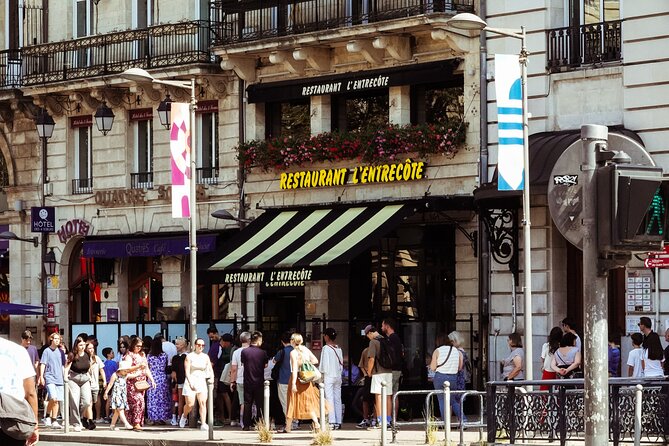
The walk closes with civic monuments and city-planning stories.
At Allées de Tourny, you’ll learn about the design behind this grand tree-lined avenue and the influence of a key figure in shaping Bordeaux’s layout—and even how their urban development ideas fed into Paris. Even if you don’t remember the name (the tour data doesn’t provide it), the point sticks: Bordeaux didn’t just “happen.” People planned it, and those plans still show.
Then you finish at Place des Quinconces with the Monument aux Girondins. This one is about memory and symbolism. The monument honors the Girondin deputies who died during the French Revolution. The sculptures represent liberty and the triumph of the Republic, and the design also includes a nod to Bordeaux’s maritime heritage. Standing in the largest square area, you get a sense of how public art acted like political messaging.
Time note: the final stop is about 5 minutes, but it’s a solid closing beat because the monument is hard to ignore once you’re there.
The Wine Stop After the Walking: Simple, Local, and Well-Timed
The tour ends with a glass of Bordeaux wine at a partner spot. This isn’t a heavy wine lesson, and that’s okay. After two hours of walking and facts, a small pour is a nice way to make the day feel real.
I like that it comes after the history stops, not before. You get the context first—what the city has been through, how it grew, and why these places matter. Then you get a local taste to mark the transition from “learning” to “enjoying.”
If you’re still awake and hungry after, you’re now right where the city’s big energy is—an easy platform to keep exploring.
Is $90.36 Worth It for a Private 2-Hour Bordeaux Walk?
Let’s talk value, not just cost.
At about $90.36 per person for a private guided walk, you’re paying for:
- A guide who can answer your questions
- A route designed to hit major center-city landmarks quickly
- UNESCO-relevant stops in a compact loop
- An included glass of Bordeaux wine
The tour also includes a series of stops where admission is listed as free, but entrance inside monuments isn’t included. That means the price is better viewed as paying for interpretation and time, not for ticket access.
If you’re the kind of traveler who enjoys walking with a story (and wants a personal pace), this is a fair setup. If you mainly want interior museum time, you’ll likely get more value by pairing this with a separate paid attraction.
One more small value point: this experience is often booked about 40 days in advance on average, which suggests it’s not something you want to leave until the last minute if your dates are fixed.
Who This Tour Fits Best
This is a great match if:
- You want a private guide instead of a big group
- You’re visiting Bordeaux for a limited time and want the “big picture” fast
- You enjoy architecture plus political and royal stories
- You like ending with something local to drink
It may be less ideal if:
- You want long, slow stops inside monuments
- You’re hoping for a full wine-tasting flight (this is a single glass)
Should You Book This Bordeaux History Tour?
Yes, if your goal is to understand Bordeaux quickly while walking its most recognizable streets and monuments, with a private guide in English and an included wine at the end. The route is built for orientation: you’ll see the cathedral area, key gateways, major squares, and the theatrical/cultural core without wasting hours on transit.
I’d book it especially if you like history that connects to place—royal weddings, English-era threads, revolutionary memory, and how civic planning shaped the city you’re standing in.
FAQ
How long is the private Bordeaux history tour?
It lasts about 2 hours.
Is this a private tour or shared group?
It’s a private tour/activity, so only your group participates.
What language is the guide in?
The tour is offered in English.
Is a glass of wine included?
Yes. You get a glass of Bordeaux wine at the partner location after the tour.
Are entrance tickets to monuments included?
Entrance inside the monuments is not included. The tour does list admissions as free for the stops, but you should plan around exterior viewing and nearby access.
Where does the tour start and end?
It starts at Cathédrale Saint-André de Bordeaux, Pl. Pey Berland, 33000 Bordeaux, and ends at Place des Quinconces, 33000 Bordeaux.
What’s the cancellation policy if plans change?
You can cancel for a full refund if you cancel up to 24 hours in advance of the experience’s start time.
More Tour Reviews in Bordeaux



Just Your Party, Around Bordeaux
The Old Port, Up Close






Just Added: Fresh Bordeaux Reviews

Bordeaux History & Landmarks Tours, compared.
 ★ 4.8Historic Center & Chartrons District Bike TourFrom $42709 reviews
 ★ 4.9Top Landmarks & Historic Bike TourFrom $42346 reviews
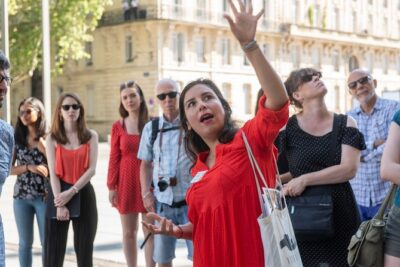 ★ 4.02-Hour Walking Tour of the City’s Iconic Sights and HistoryFrom $17207 reviews
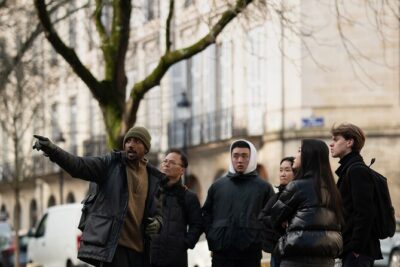 ★ 5.0Bordeaux’ Best Boulangeries & History TourFrom $72126 reviews
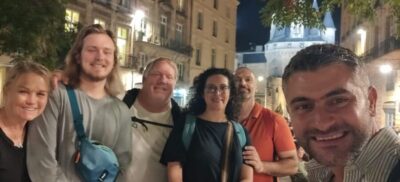 ★ 4.9Exclusive! Bordeaux: Nighttime Highlights Walking TourFrom $6485 reviews
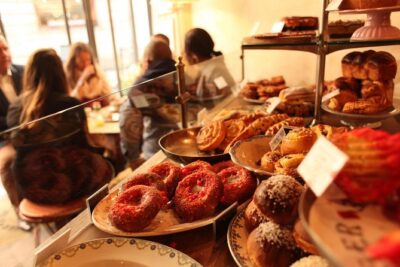 ★ 4.5Bordeaux Historic and Gourmet Food Walking TourFrom $10382 reviews
 ★ 4.0Guided cruise Bordeaux UNESCOFrom $1634 reviews
 ★ 5.0Historical Center, Bordeaux Food TourFrom $14433 reviews
Browse the lists this tour appears in